What the maker puts in writing
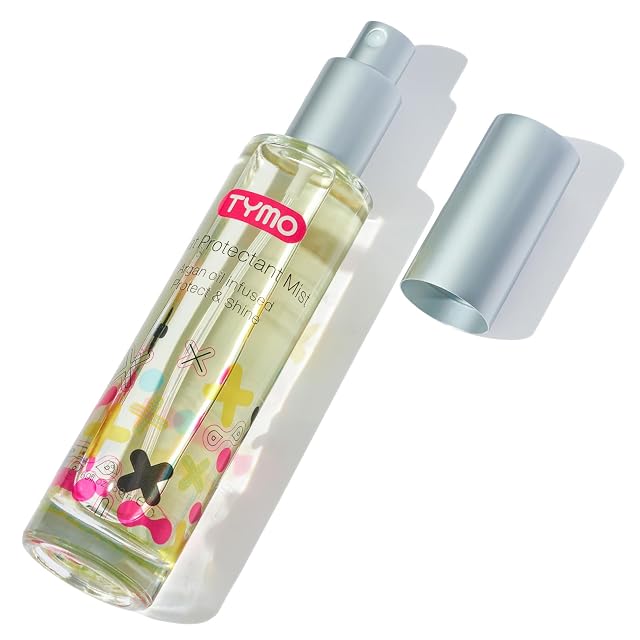
- “Thermal Protectant Up to 450°F - TYMO heat protect spray contains the oil-hydrolyzed keratin constituted unique heat protection system that protects against the damaging effect of heat styling up to 450°F”
- “For Daily Hair Care - TYMO hair oil adopts Argan oil-infused essence, coating every strand of hair, and makes your hair healthier after applying a few drops. The natural plant oil helps to repair damaged hair, split ends by improving the smoothness and frizz control of the hair surface. It is also perfectly used as a leave-in conditioning serum”
- “For Guaranteed Professional Styling Results - allows you to maximize your hair styling with heat, whether you’re creating curls, waves or a sleek straight look”
- “Weightless Mist Spray For All Hair Type - Different from other greasy and crunchy hair oil, TYMO heat protectant with a lightweight and invisible formula is suitable for all hair types, whether coarse or thin. The patent anti-stuck spray nozzle releases weightless mist”
- “Just Right Scent - the signature scent is an iconic juxtaposition of spicy amber and musk with sweet florals. Unlike other stinky sprays in the cheap plastic bottle, TYMO adopts nature plant essence, well preserved in a glass bottle”
It cannot decide whether it is a spray or an oil
Bullet one is a spray: “TYMO heat protect spray contains the oil-hydrolyzed keratin…”
Bullet two is an oil: “TYMO hair oil adopts Argan oil-infused essence… makes your hair healthier after applying a few drops… also perfectly used as a leave-in conditioning serum.”
Bullet four is both, in one sentence: “Different from other greasy and crunchy hair oil, TYMO heat protectant with a lightweight and invisible formula…”
The tell is “a few drops”.
A mist spray is not dosed in drops. You cannot count the output of a spray nozzle, and nobody applies a few drops of anything through one — drops are how you dose a serum poured or pipetted into a palm.
So bullet two is describing a different product, or at minimum text written for one.
Which matters practically rather than just editorially.
An oil goes in a palm, is warmed between the hands, and is drawn through the mid-lengths and ends — a few drops for fine hair, more for coarse.
A mist is sprayed at a distance over a whole section, and the amount is governed by passes rather than drops.
Confuse the two and you either under-apply a protectant or over-apply an oil — and over-applied oil on hair you are about to iron is the worse error, because oil conducts heat rather than insulating against it, and oils have smoke points. At the 450 °F this page names, an oil sitting on a plate is being cooked.
What survives the confusion: bullets one, three and four all describe a spray, and bullet four describes it well — “lightweight and invisible formula”, “patent anti-stuck spray nozzle releases weightless mist”, “without causing excessive greasy or oil to hair”.
So the product in the bottle is almost certainly a mist, and bullet two is borrowed from a stablemate.
Treat it as a spray, and ignore “a few drops”.
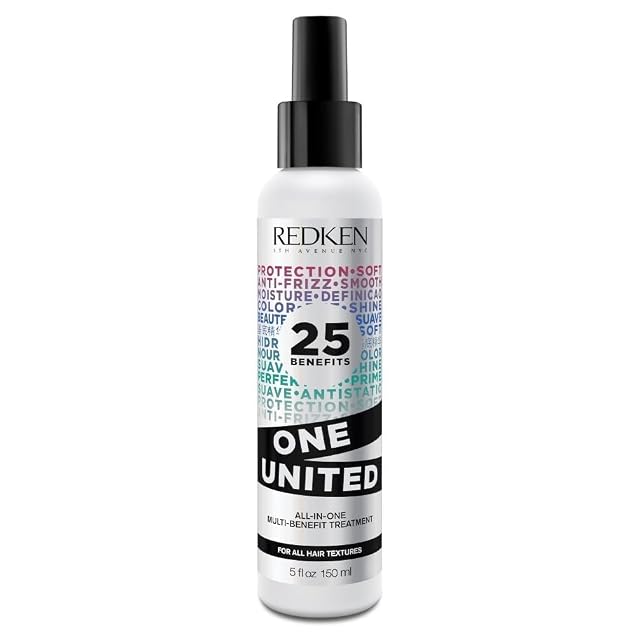
For comparison, the only page on this shelf with a complete and coherent instruction is the OGX at $10.47: “Holding 6.5 fl oz continuous mist spray bottle 6-8 inches away from hair, apply on damp hair from mid-length to ends (avoiding roots) before blow-drying; then apply on dry hair before curling or straightening.”
Hydrolyzed keratin, which is the best-named ingredient here
“the oil-hydrolyzed keratin constituted unique heat protection system”
Keratin is the protein hair is made of.
Hydrolyzed keratin is keratin broken into fragments small enough to penetrate or adhere to the hair — whole keratin is far too large a molecule to do anything but sit on the surface and rinse away.
So the hydrolysis is the part that makes it functional, and naming it is a real specification rather than a buzzword.
What it does.
It deposits into the gaps where the cuticle is lifted, worn or missing — which smooths the surface, reduces porosity, and holds water in.
On damaged hair that is a genuine improvement: a smoother cuticle means less drag under a comb or a plate, less frizz, and less water escaping.
Which pairs sensibly with this page’s own claim about “repair damaged hair, split ends”.
A split end cannot be repaired — the fiber is divided and will stay divided — but a protein can fill and bind the frayed surface so it looks and behaves better until it is cut off. That is the honest version of that claim.
What it does not do is insulate.
Slowing heat transfer requires a film that conducts heat more slowly than hair does and that slows the escape of the water inside the shaft — and the film-formers that do that job in most commercial heat protectants are silicones.
Not one of the nine pages on this shelf names a silicone, or any film-forming agent at all.
How the shelf’s named ingredients compare.
Proteins — hydrolyzed keratin here, the most specific on the shelf; “smart binding hair proteins” on the OGX at $10.47; rice protein on the Hairitage at $8.94; a “Honey Protective Complex” on the Bumble at $17.00; “protein science” and “STYLEPROTECT Technology” on the Nexxus at $13.99, which are a discipline and a trade name rather than substances
Oils — argan here, argan on the Hairitage, argan and panthenol on the Moroccanoil at $15.00, where panthenol is a genuine humectant and the only one on this shelf
Nothing at all — the L’Oreal Paris at $8.99, the CHI at $13.99, the Living Proof at $34.00
So on ingredient disclosure this page sits at the top of the shelf.
And the phrase “oil-hydrolyzed keratin constituted unique heat protection system” is still doing something the ingredient cannot: calling a repair protein a protection system.
Argan oil, which is the wrong mechanism to lead bullet two with
“TYMO hair oil adopts Argan oil-infused essence, coating every strand”
Oil conducts heat. It does not insulate.
A film of oil on a strand carries heat into the hair rather than holding it off — and at the 450 °F this page names in bullet one, an oil on a plate is above its smoke point.
Which makes argan oil a conditioning ingredient on a thermal product: good for how the hair feels, not the thing in the name.
Three of the nine pages here lead with it: this one, the Hairitage at $8.94 and the Moroccanoil at $15.00.
And the page half-knows it, because bullet four spends its length distancing itself from oils: “Different from other greasy and crunchy hair oil”, “without causing excessive greasy or oil to hair.”
Two bullets apart, the product is an argan oil and is not like other oils.
A glass bottle, and a shot at the competition
“Unlike other stinky sprays in the cheap plastic bottle, TYMO adopts nature plant essence, well preserved in a glass bottle”
This is the only glass bottle on this shelf, and no other page publishes its packaging material at all.
What glass genuinely does.
It is impermeable. Plastic is not: over months, volatile compounds — fragrance, and the lighter fractions of plant oils — migrate slowly out through a plastic wall while oxygen migrates in.
So a fragranced, oil-containing formula does keep better in glass, and “well preserved” is the right phrase for what is being claimed.
Glass is also inert, where some plastics can interact with essential oils and solvents.
Where the claim overreaches.
“Stinky” is a claim about rivals’ formulas rather than their bottles, and nothing follows from packaging material to smell at the point of sale — a plastic bottle filled last month smells like what is in it. The oxidation effect is slow, and matters over a long shelf life rather than in the first weeks.
What glass costs you goes unmentioned: weight, and the bathroom floor.
A glass bottle dropped on tile breaks, and this is a product used in exactly that room, often with wet hands.
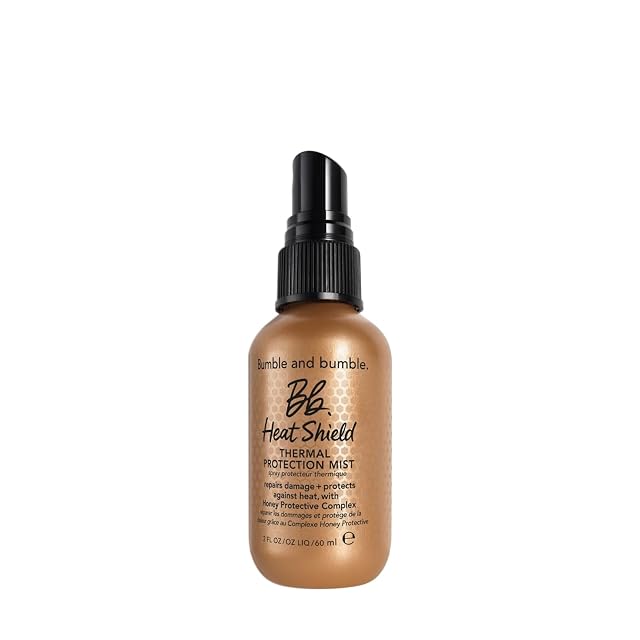
It is also the one bottle on this shelf you would not put in a gym bag — which is worth setting against the Bumble and bumble at $17.00, one cent more, whose entire proposition is being a “Mini Travel Size”.
The nozzle claim in bullet four is the more useful packaging detail.
“The patent anti-stuck spray nozzle releases weightless mist”
Clogging is a real failure of mist sprays carrying oils and proteins. The residue dries in the orifice, and the spray turns into a jet or a dribble — which ruins the even film a protectant depends on, and leaves wet patches instead.
Only one other page addresses delivery at all: the OGX at $10.47, with a “continuous mist” bottle, which is about steady output rather than clogging.
And the scent coincidence on this shelf is worth recording rather than interpreting.
this — “spicy amber and musk with sweet florals”
Moroccanoil, $15.00 — “an exotic blend of spicy amber aromas and sweet floral notes”
Two pages, two dollars apart, describing their signature scents in nearly the same words.
Four hundred and fifty degrees, which eight pages share
“protects against the damaging effect of heat styling up to 450°F”
450 °F — this, the Hairitage at $8.94, the L’Oreal Paris at $8.99, the OGX at $10.47, the CHI at $13.99, the Nexxus at $13.99, the Moroccanoil at $15.00 (as 450 °F / 230 °C, the only dual-unit figure here), the Bumble and bumble at $17.00
No temperature at all — the Living Proof at $34.00, the most expensive item here
Eight brands, a price range of nearly twice over, one identical ceiling.
Which means 450 °F is not a specification. It is a convention — and the convention has an obvious origin: 450 °F is the maximum setting of nearly every consumer flat iron sold.
So “up to 450°F” is a statement about the tool rather than the product. It says: whatever your iron can do, this is sold for it.
What no page here publishes is the degree of protection — how much cooler the hair runs, what proportion of damage is prevented at a stated temperature, how long the film lasts, or how many passes of an iron it survives.
And the third bullet is where this page is weakest on substance: “allows you to maximize your hair styling with heat, whether you’re creating curls, waves or a sleek straight look. It works in harmony with your styler for a salon-grade finish.”
Which names three outcomes and promises harmony, and says nothing measurable about any of them.
What is not published
No volume, at $16.99. One page on this shelf publishes one: the OGX at $10.47, “6.5 fl oz”, about $1.61 per fluid ounce. The Bumble at $17.00 declares itself a “Mini Travel Size”. Everything else, including this, is a price with no quantity — and on a spray, price per ounce is the whole of the value question. On the one bottle that makes an argument about its packaging, the absence of a capacity is the odd omission.
No application instruction, and a contradictory dose, as above.
No application distance. One page gives one: the OGX at $10.47, “6-8 inches away from hair”. Too close deposits a wet patch rather than a film — which is both the greasiness this page spends a bullet disclaiming, and a worse thermal situation, because it is water sitting on a strand you are about to heat. A film only works where it exists, and evenness is a function of distance.
No damp-or-dry guidance. This is the instruction that matters most, because the damage a hot tool does is driven by the water inside the shaft: at iron temperatures it can pass 100 °C and flash to steam within the fiber, blowing microscopic cavities through the cortex on its way out. The Bumble at $17.00 states the right simple rule — “protects dried hair” — and the OGX at $10.47 gives the full two-stage version. The Hairitage at $8.94 gets it wrong in the other direction, permitting an iron on wet hair. This page says nothing.
No film-forming agent, as above.
No hold statement. One page settles it, twice: the Moroccanoil at $15.00 — “Weightless, no-hold spray”, “contains no hold, blending seamlessly into any existing styling regimen”. The Living Proof at $34.00 claims the opposite: “Enduring Style: Maintains style for extended periods.” It is a genuine fork rather than a detail — a protectant with any hold is also a styling product and interferes with what you apply after it. This page’s “works in harmony with your styler” gestures at the no-hold position without taking it.
No degree of protection, as above.
No study or evidence. Two pages cite something: the Nexxus at $13.99 — “89% agree hair felt moisturized In a salon study with 45 consumers on 11.3.2021”, which names a sample size, a date and a measure that announces itself as perception rather than strength — and the OGX at $10.47, with three footnoted figures whose footnote text appears nowhere on its page.
No color-safety statement. Two pages make one: the Bumble and bumble at $17.00 (“Color Safe”) and the Nexxus at $13.99 (“protects vibrancy after styling”). Heat is what lifts color, so a protectant used before an iron is exactly where the claim belongs.
No UV filters. One item here claims them, and it is the only additional protective claim on this shelf: the Bumble and bumble at $17.00 — “Added UV Filters help protect hair against the drying effects of the sun.”
No free-from list. Three pages publish one: the L’Oreal Paris at $8.99, the CHI at $13.99 and the OGX at $10.47.
No country of manufacture.
And “patent anti-stuck spray nozzle” names no patent number, which is the usual shape of that claim and the reason it cannot be checked.
Availability
Read on the day this page was built: $17 at the American Amazon shop.
Read from Keepa on the day this page was last revised; stock and price both move without notice.
Prices quoted in this text were read on 2026-10-05. The live price is at the top of the page.