Skip to content

The best hair dryers for 2026

Wattage is the number on the box and airflow is the number that dries hair, and they are not the same measurement — a more efficient motor can move more air at lower stated power than a conventional one. The figures we compare are motor type, stated wattage and airflow where the manufacturer publishes it, the grid of heat and speed settings (three heats and two speeds is a different tool from two combined settings), the presence of a cold shot, which attachments fit, cable length and weight. Weight would matter too, since it is held at arm's length for ten minutes, but none of the four European models publishes it. Blow-drying without a fight and looking after a hair dryer complete the shelf.

The models we recommend

  1. Remington D3198

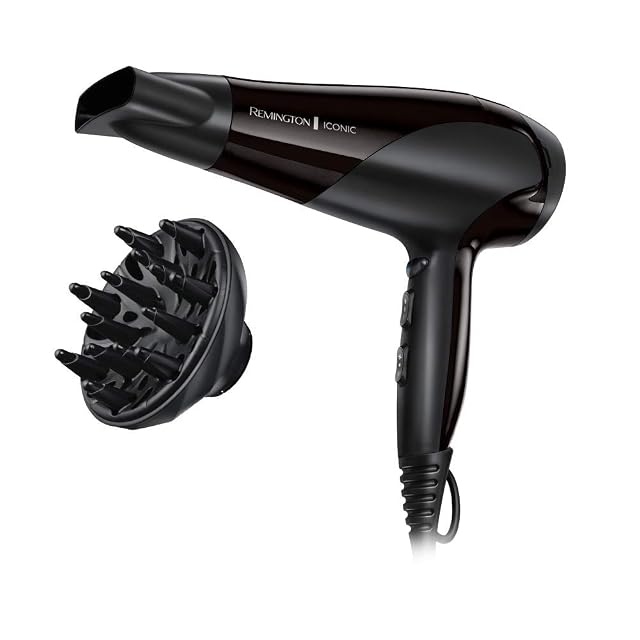
    2200 W · 3 heat + 2 speed, separate · cold shot · diffuser and nozzle

    2200 watts, three heat settings and two fan speeds on separate controls, a cold shot, a ceramic-ionic grille, and both a styling nozzle and a diffuser in the box.

    Best for: Everyday drying where the diffuser matters and the budget does not stretch.
    7.5/10

  2. Grundig HD 6080 B

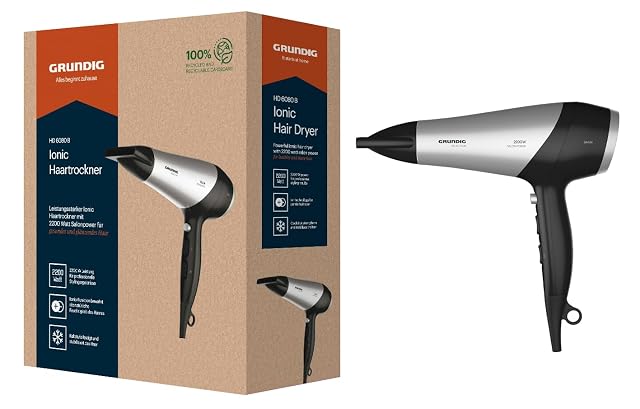
    2200 W · 3 heat + 2 speed · cold shot · 1.8 m (6 ft) cable · ceramic

    Two thousand two hundred watts with three temperature and two airflow settings plus a cold shot, a ceramic coating stated for even heat, a narrow styling nozzle and a diffuser, on a 1.8 meter (5.9 ft) cable.

    Best for: A second dryer, or a first one, where the price is the point and the diffuser still has to be in the box.

    6.9/10

  3. Remington AC9140B

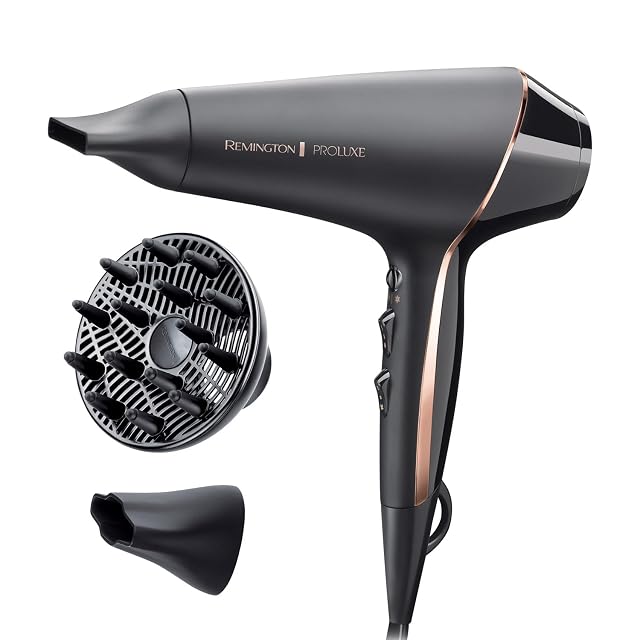
    2400 W AC motor · 150 km/h · 3 attachments · 3 m (10 ft) salon cable

    A 2400 watt AC motor with a published airflow figure of 150 km/h, three attachments including a 7 mm (0.28 in) precision nozzle, a true cold shot, a removable filter and a three-meter salon-length cable.

    Best for: Drying thick or long hair often, where airflow and cable length stop being details.

    8.1/10

  4. Philips BHD510/20

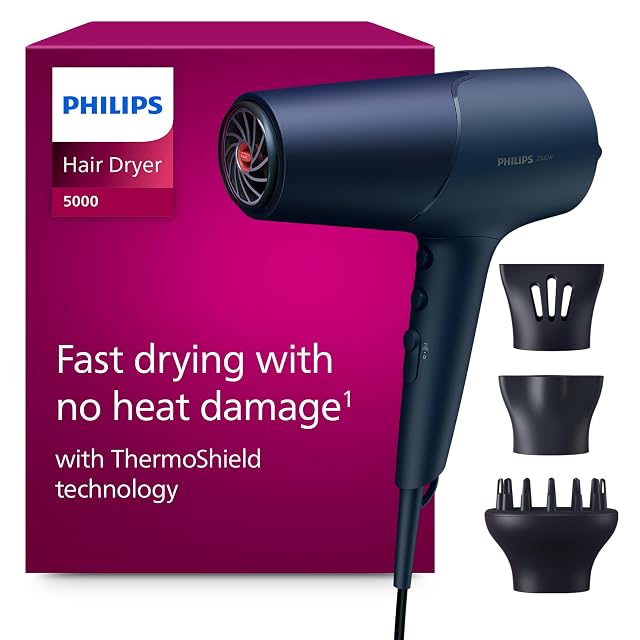
    2300 W · 110 km/h · ThermoShield · 9 mm (0.35 in) and 11 mm (0.43 in) nozzles · diffuser

    A 2300 watt dryer with a published air speed of 110 km/h, a ThermoShield overheat sensor that Philips states actively controls air temperature, two styling nozzles at 9 and 11 mm (0.43 in), and a volume diffuser.

    Best for: Drying with heat kept in check by the dryer rather than by the person holding it.

    8.1/10

Hair dryers and who each one is for

Thick or long hair
Air flow counts more than temperature: it is what carries the water away. A powerful appliance dries faster and at a lower temperature.
Fine hair
A moderate temperature setting and a controlled flow avoid stressing it needlessly. The cool-shot setting sets the style at the end of drying.
Curly hair
A diffuser spreads the air without breaking the curl. Drying curly hair without a diffuser is what makes it frizz.

The trade-offs of hair dryers

Power against weight and noise
A powerful appliance dries fast, weighs more and makes more noise. Over a long dry, the weight tells in the arm.
Heat against hair condition
Maximum heat dries faster and stresses the fiber more. A good air flow lets you dry at a lower temperature.
Accessories against bulk
Concentrator and diffuser are genuinely useful and easily lost. Check they are supplied rather than sold separately.

What keeps coming up about hair dryers

Power or temperature?

Air flow counts more: it is what carries the water away. Good flow lets you dry faster at a lower temperature.

How far away should I dry?

At least fifteen centimeters, keeping the appliance moving. A fixed hot spot is what damages most.

What is the cool shot for?

Cooling the fiber at the end of drying, which helps the style hold. An under-used setting.

Do I need a diffuser?

On curly or wavy hair, yes: it spreads the air without disturbing the curl. Without it the hair frizzes.

What is the concentrator for?

Directing the air onto a section during a blow-dry. The essential accessory for smoothing while drying.

Should the rear grille be cleaned?

Regularly: a clogged filter makes the appliance overheat and reduces flow. It is the first cause of a dryer that cuts out by itself.

Why does my appliance stop by itself?

The thermal cut-out trips, almost always because of a blocked filter. Clean the rear grille before concluding it has failed.

Does ion emission change anything?

Makers associate it with less static. The perceived effect varies a great deal from hair to hair.

In short, on hair dryers

It is the air flow that dries, not the temperature: good flow lets you work cooler. Keep the appliance moving fifteen centimeters away, finish with the cool shot, and clean the rear grille — it is almost always that when the appliance cuts out.

Hair dryers at a glance

  • Highest figure for power: Remington AC9140B (2400 W, AC motor).

Hair dryers, side by side

Specifications that fewer than four of these models in five publish are left out of this table. Keeping them would fill it with blanks and make a shared gap look like a difference.

ModelPriceAttachmentsPower
Grundig HD 6080 B—Narrow styling nozzle and diffuser2200 W
Philips BHD510/20—9 mm (0.35 in) and 11 mm (0.43 in) styling nozzles, volume diffuser2300 W
Remington AC9140B—PROluxe styling nozzle, 7 mm (0.28 in) precision nozzle, diffuser2400 W, AC motor
Remington D3198—Styling nozzle and diffuser2200 W

Where hair dryers are covered

Where the numbers come from

Specifications: manufacturer sheets for grooming tools and the matching Amazon product pages. Prices and availability: Keepa. Every figure in this table names its source.

Most recent revision in this category: October 12, 2026.

How we assess hair dryers