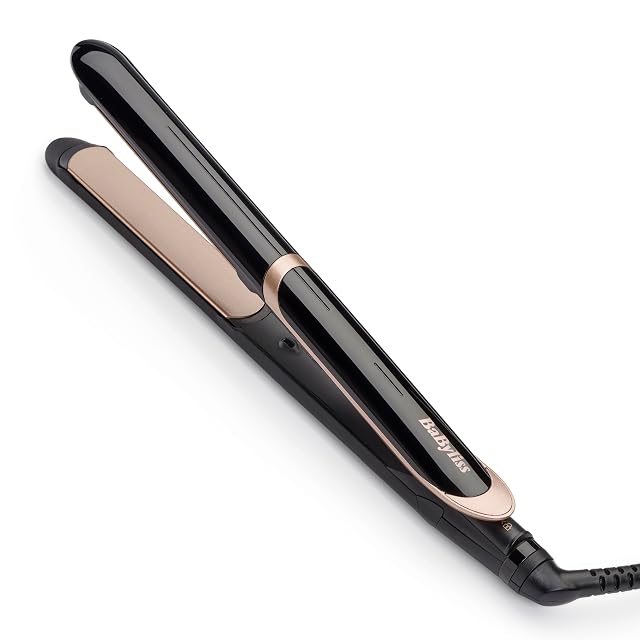
What the maker puts in writing
- “3 HEAT LEVELS - Our beard comb heats up in 30 seconds to provide several heat levels to match your hair type - 300°F for thin hair, 355°F for medium and wavy hair, and 400°F for thick and curly hair. One-touch heat adjustment makes it super easy to use!”
- “SINGLE STROKE TECHNOLOGY - allows you to save a significant amount of time grooming and perfecting your beard with a single brush stroke. Our variable heat gauge and ION technology allows you to groom and tame any beard in a flash.”
- “REDUCES FRIZZ - Using advanced ionic technology, this heated beard brush for men works to get rid of frizz and lock in moisture for smoother, healthier results for your beard.”
- “ALL DAY RESULTS - With an included comb and travel bag, this beard kit is the ultimate gift for men who need to stay suave all day long.”
- “SAFETY FEATURES - Our hair straightener brush includes a 30 minute auto shut-off and a 360° swivel cord, and supports 110-240 voltage.”
Three temperatures, each with the hair it is for
“300°F for thin hair, 355°F for medium and wavy hair, and 400°F for thick and curly hair. One-touch heat adjustment makes it super easy to use!”
This is the only page on this shelf that tells you which setting to choose.
What every other page gives instead is a range, or a count.
250–450 °F in 12 levels — the Arkam at $28.99, this product’s own dearer sibling, on a digital screen
9 settings, Turbo to 450 °F — the Remington at $33.99
338–446 °F in 5 settings — the FEBOTE at $25.99, on an LCD
356–428 °F in 3 settings — the XIKEZAN at $21.52
3 settings up to 400 °F — the Wild Willies at $29.90, on an LED display
400 °F, “multiple” settings — the REVLON at $13.96, which publishes a ceiling and no count
392 °F, fixed — the CHI at $44.12: “an on/off switch (no adjustable heat setting)”
Twelve levels is the most and one is the fewest, and none of those pages says which level to use.
Why that is the question that matters.
The damage a heated tool does scales with temperature, and the right temperature is the lowest one that straightens.
Fine hair straightens at 300 °F. Running it at 400 °F does not straighten it better; it damages it more for the same result.
So a page offering twelve levels without guidance leaves a user to find that out by experiment, on their own beard.
Which is why three well-labeled levels can be more useful than twelve unlabelled ones.
And the three figures are sensibly spaced: 300, 355, 400 — a hundred degrees of range in two steps, which covers the real variation in beard hair.
“One-touch heat adjustment” is also the right interface for three levels.
A single button cycling three states is faster and less error-prone than a dial or a pair of keys — which is what twelve levels needs, and why the sibling at $28.99 has a screen.
Three settings do not require a display, and this page does not claim one.
Where 400 °F sits in the wider picture.
On GroomVerdict’s heat-protection shelf, eight of the nine protectant sprays claim protection “up to 450 °F”. So this ceiling is 50 degrees inside what that whole category is rated for, and the 300 °F floor is well below it.
For contrast, on the hot-air-brushes shelf the Tqcir at $139.99 deliberately caps at 250 °F with a sensor “to prevent hair cuticle damage from overheating” — fifty degrees below this comb’s floor. Different tools: a brush dries and shapes with moving air, where a comb presses heat directly into the hair.
The missing anti-scald claim
What this page publishes under safety: “a 30 minute auto shut-off and a 360° swivel cord, and supports 110-240 voltage.”
Three features, none of which is about the thing touching your skin.
What the other four beard combs publish.
FEBOTE, $25.99 — the clearest mechanical explanation on this shelf: “the anti-scalding tooth comb is higher than the heated tooth comb to protect skin”
XIKEZAN, $21.52 — “protective guards around each bristle to prevent sensitive skin contact with hot plates”
Arkam, $28.99 — this product’s own dearer sibling, which adds “an anti-scald feature” to the otherwise identical safety bullet
Wild Willies, $29.90 — “The anti-scald design prioritizes safe and comfortable use”
Why it is specific to this class of tool.
A flat iron is held away from your skin by the section of hair itself: the plates close on hair, and the hair is between the metal and you.
A beard comb is the opposite.
It is drawn across a face, with teeth passing through hair one to three centimeters long — so the heated surface is millimeters from the cheek, the jaw and the neck, and the hand doing it cannot see the far side.
The FEBOTE mechanism is the whole answer, and it is simple: a second row of unheated teeth standing slightly taller than the heated ones.
The taller teeth touch your face. The hot ones never can.
It is the same principle as the guard on a nose trimmer or a guide comb on a clipper — a physical standoff rather than a promise — and it is the kind of thing that either exists in the molding or does not.
So its absence from this page is not a wording gap.
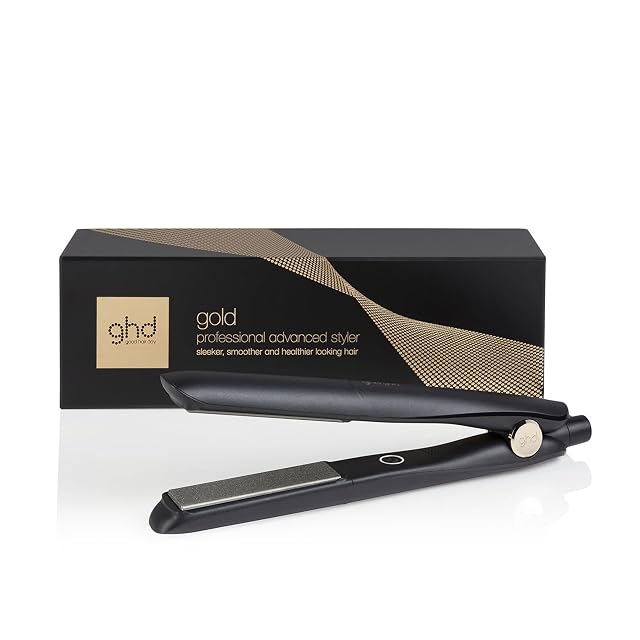
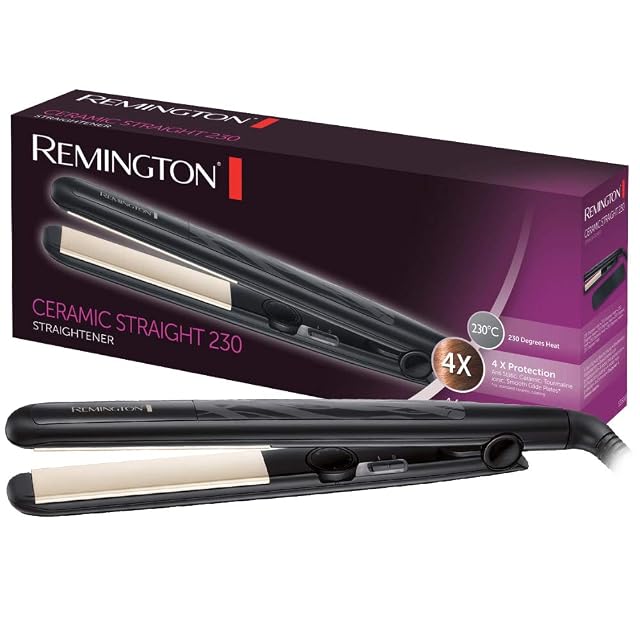
The three flat irons on this shelf have no equivalent claim and do not need one: the REVLON at $13.96, the Remington at $33.99 and the CHI at $44.12.
What this page does publish is worth having, and the 30-minute cut-off addresses the more common hazard.
A 400 °F object left switched on is the classic domestic risk of this whole category.
30 minutes — this, the XIKEZAN at $21.52, the FEBOTE at $25.99, the Arkam at $28.99
“Turns off when not in use” — the Wild Willies at $29.90, with no interval
1 hour — the Remington at $33.99: the longest, and therefore the least protective
Nothing at all — the REVLON at $13.96 and the CHI at $44.12
Which makes this page’s safety record mixed rather than poor: standard on the hazard everyone addresses, silent on the one specific to its own format.
Ions, and the claim in tension with itself
“advanced ionic technology… works to get rid of frizz and lock in moisture”
What ions do.
Dry hair carries an electrostatic charge. Like charges repel, so individual hairs push away from each other — which on a beard is the fuzz standing out from the outline, worse in winter and worse after any dry heat.
Emitting ions neutralizes the charge so the hairs lie down. A real, well-understood effect.
What ions do not do.
Humidity frizz is the opposite phenomenon: water from the air going into the hair and swelling the shaft, which lifts the cuticle and makes the hair wavy and rough.
Ions do nothing about that. What helps there is a cuticle lying flat — which is exactly what this tool produces mechanically, by applying heat with tension.
So “get rid of frizz” is half right, and the tool will deliver it by two mechanisms: one of them the ions, one of them the heat and the pull.
Now “lock in moisture”, which is the claim to flag.
Straightening works by breaking the hydrogen bonds in the hair and letting them re-form in a new shape as it cools — and water is what those bonds are mediated by.
Driving water out of the hair is not a side effect of straightening. It is the mechanism.
So a 400 °F comb cannot lock moisture in while it is working.
What a page could honestly claim is helping the hair hold water afterwards, which is a conditioning effect rather than a thermal one — and nothing here names an ingredient or a coating that would do it.
How the shelf handles the same claim.
Arkam, $28.99 — the sibling, identical wording: “get rid of frizz and lock in moisture”
XIKEZAN, $21.52 and FEBOTE, $25.99 — ionic technology, with the claim limited to taming and tangles
Wild Willies, $29.90 — “Negative ion function not only protects your hair from damage but also keeps it looking healthy”, the broadest version, with no mechanism for the protection
CHI, $44.12 — the outcome with no ions at all: “reducing frizz and static” from ceramic plates
Remington, $33.99 — the only material-transfer claim here: plates “infused with Argan oil, protein-packed Keratin, and a micro-conditioner”, with “up to 50% shinier hair” and no method published
At least five of the twelve items on this shelf claim ions, and all five are the beard combs.
Single stroke, and what a comb can and cannot do
“SINGLE STROKE TECHNOLOGY - allows you to save a significant amount of time grooming and perfecting your beard with a single brush stroke.”
This shelf holds two different tools under one name, and the difference decides what either can achieve.
A flat iron clamps a section between two heated plates. Full contact on both sides, maximum heat transfer, and the section is held under tension while it cools — which is what makes a hard, straight line possible, and also what can leave a crease.
A heated comb passes heated teeth through the hair. Partial contact, less heat into any one hair, no tension, and no crease.
Which is why beard tools are combs and head tools are irons, and the reason is anatomical rather than commercial.
A beard is short hair attached to a curved face you cannot clamp. A head section can be held taut and away from the scalp.
So “single stroke” is a fair description of what a comb does and a limit on what it delivers: it will take the bend out of a beard and lay it in one direction, and it will not produce the glassy flatness a plate gives.
Which is worth knowing because three of the five beard combs on this shelf also claim head-hair use.
this and the Arkam at $28.99 both title themselves “hair straightener brush”
FEBOTE, $25.99 — “It can also be used to straighten your hair if you want to complete a new look”
A comb will reduce volume and smooth head hair. It will not do what the REVLON at $13.96, the Remington at $33.99 or the CHI at $44.12 do, because it cannot apply pressure from both sides.
The honest case for a comb on head hair is as a fast, low-commitment smoothing pass, not as a substitute for an iron.
What is not published
No anti-scald feature, as above — the one gap that is specific to this format, and its own dearer sibling has it.
No tooth or plate material. At least five of the twelve items here name one: “PTC ceramic” on the XIKEZAN at $21.52 and the FEBOTE at $25.99, “Tourmaline ceramic” on the Wild Willies at $29.90, ceramic “infused with Argan oil… Keratin, and a micro-conditioner” on the Remington at $33.99, a “ceramic coating” on the REVLON at $13.96, and “ceramic floating plates” on the CHI at $44.12. PTC is worth knowing about: it is a heating element whose resistance rises as it warms, so it self-limits and cannot run away — which the Wild Willies page states most precisely as “self-regulating heat elements”, and which is why the two PTC pages both claim “reducing temperature fluctuations”. On a comb held against a face, a self-limiting element is a safety feature as much as a performance one, and this page names no element at all.
No display. Three items here have one: a digital screen on the Arkam at $28.99, an LCD on the FEBOTE at $25.99, and an LED on the Wild Willies at $29.90. With three labeled levels and one-touch cycling, a display is arguably unnecessary — and it is the thing that tells you which of the three you are currently on, which one-touch cycling otherwise leaves to memory.
No certifications. Two pages publish them, and both are beard combs: the XIKEZAN at $21.52 lists “CE, FCC, ROHS, UL and CA65” — five, including California Proposition 65 — and the FEBOTE at $25.99 lists “FCC, CE, ROHS” and separately “UL approved”. UL is the one that matters on a mains heating appliance held against skin, and six of eight items on this shelf publish none.
No cord length. Two pages publish one: 11 ft on the CHI at $44.12 and 9 ft on the Remington at $33.99. The swivel is the more useful half of the claim on a tool you rotate constantly, and six of eight items here have one.
No weight and no dimensions. One item on this shelf publishes both: the XIKEZAN at $21.52 — “ultra-compact size (10.47” x 2”)” and “lightweight (only 8.8 oz)” — which are the only such figures anywhere here, on a shelf where five of eight pages sell themselves on travel.
No contents list beyond “an included comb and travel bag”. The XIKEZAN at $21.52 itemizes the most generous box here: a straightener, beard oil, styling balm, a premium comb and a guide e-book, in a gift box. The Arkam at $28.99 upgrades this page’s bag to a “hard shell travel case”, which on a tool with protruding teeth is the more useful container.
No dry-hair instruction. One page on this shelf publishes one and it is the most important instruction here: the Remington at $33.99 — “Use on dry hair only.” Hair holds water inside the shaft, and at these temperatures that water can flash to steam inside the fiber and blow microscopic cavities through the cortex. Across all of GroomVerdict only two products state the rule: that iron, and the Bumble and bumble heat protectant at $17.00 on the heat-protection shelf — “protects dried hair”.
No country of manufacture, which no item on this shelf publishes.
Availability
Read on the day this page was built: $21 at the American Amazon shop.
Read from Keepa on the day this page was last revised; stock and price both move without notice.
Prices quoted in this text were read on 2026-10-05. The live price is at the top of the page.