What the maker puts in writing
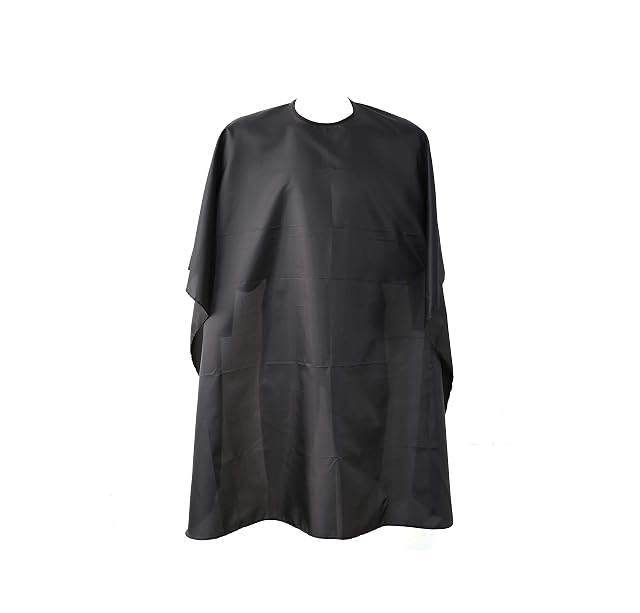
- “Full coverage barber cape - 59 x 45 inch size helps cover shirts and shoulders during haircutting, beard trims, styling and salon service.”
- “Adjustable magic tape closure - Fasten the neck area for all neck sizes from children to large-frame adults or home users with one quick.”
- “Lightweight cape fabric - Shakes off loose hair after use, folds for storage and helps keep everyday haircutting cleanup more contained.”
- “For shop or home haircuts - Works for barber shops, salons, family trimming, beard grooming and hair coloring prep when the cape is used correctly.”
- “Expectation setting - This is a reusable haircutting cape, not a haircutting kit; scissors, clippers and other tools are not included.”
- From the name: “59 x 45 Inch”, “Adjustable Barber Salon Cape”
- Catalog: 120 g (4.2 oz)
A hundred and twenty grams, and the one property it names
“Lightweight cape fabric - Shakes off loose hair after use, folds for storage and helps keep everyday haircutting cleanup more contained.”
It is the only page on this shelf to name the thing you use every single time.
What decides whether a cape sheds. Two things: the smoothness of the weave, and static.
A smooth, tightly woven synthetic has nothing for a cut end to lodge in — which is why every cape on this shelf is nylon or polyester rather than cotton.
And a charged cape attracts the clippings it is meant to shed. Hair sliding across nylon or polyester builds a static charge, and that charge is the real reason hair clings and transfers to clothing when the cape comes off.
Not one of the four capes here says a word about static, an antistatic finish, or how to reduce it — including this one, which claims the benefit without naming the mechanism.
What the fabrics are.
omvoina, $4.99 — “100% nylon”
nicoc, $9.85 — “polyester taffeta fabric”
Fromm, $26.49 — “polyester”, with a PFAS-free plant-based repellent coating
this — no fabric named at all. “Lightweight cape fabric” is the whole of it
Which is the gap worth noticing, because the claim and the specification are the same question.
The weight is the one figure that supports it.
120 g — this, the lightest item on this shelf
200 g — the omvoina cape at $4.99
204 g — the Barber Strong mat at $35
Not published — the nicoc at $9.85, the Fromm at $26.49, the Beard Bro mat at $20.88
A light fabric shakes out. A heavy one holds.
And the trade runs the other way at the same time: a heavy cape drapes better, sits still, and does not billow when someone moves. At 2655 square inches and 120 grams this is the thinnest fabric on the shelf by some way.
The practical habit no page here gives: shake it away from the chair, not over it, and let it dry fully before folding. A damp cape holds everything — and “folds for storage” is this page’s own next claim.
Fifty-nine by forty-five, which is wide and short
The four capes on this shelf, by area:
nicoc, $9.85 — W59 × L67 in, about 3953 square inches, the largest here
omvoina, $4.99 — 57 × 51 in, about 2907 square inches
this, $6.59 — 59 × 45 in, about 2655 square inches
Fromm, $26.49 — 44 in wide by 58 in, about 2552 square inches, the smallest
What the two dimensions actually do, which no page on this shelf explains.
The width wraps the shoulders and closes at the back. The length covers the lap and the knees. They are not interchangeable.
This cape shares its 59-inch figure with the nicoc, which labels that figure as its width — so if 59 is the width here too, this is the joint-widest cape on the shelf and the second shortest.
Wide and short wraps generously and leaves hair on the thighs. Narrow and long — the Fromm at 44 × 58 — covers to the knee and may not meet behind a broad pair of shoulders.
And the orientation is published inconsistently, which is the trap. Only the nicoc labels its figures. The Fromm says “measures 44” wide and 58"". This page and the omvoina give a bare pair with no label.
“Full coverage” in bullet one is the claim and “helps cover shirts and shoulders” is the honest scope: shirts and shoulders, which is the upper half.
A hook-and-loop neck, and the fault the page does not mention
“Adjustable magic tape closure - Fasten the neck area for all neck sizes from children to large-frame adults or home users with one quick.”
The neck is the whole product. A cape’s job is to stop hair getting inside a collar, and every failure a cape has is at the neck.
Four capes here, four different mechanisms.
this, $6.59 — hook-and-loop, adjustable continuously
omvoina, $4.99 — an adjustable snap closure, “suitable for any size”
nicoc, $9.85 — an “UPGRADED SILICONE SNAP BUTTON NECKLINE”: “silicone neckline can hugs the neck effectively, snap button design for a secure fit. It’s not easy to get hair in clothes”
Fromm, $26.49 — “durable metal snaps… adjusted to many sizes from small to large”
What hook-and-loop does better than a snap: it adjusts continuously.
A snap sets at fixed increments, and between two snaps there is no setting. A hook strip closes anywhere, which is why this page can claim “all neck sizes from children to large-frame adults” and mean it — the widest adjustment range on this shelf, and the only mechanism that genuinely spans a child and a large adult.
What it does worse, and this page does not mention: it collects hair.
A hook strip is a field of tiny plastic hooks, and cut hair is exactly the thing they catch. At the back of a neck, in a room full of clippings, that is where the clippings go — and a hook strip clogged with hair stops gripping its loop field.
The practical answer, which no page here gives: pick it clean, and close the strip onto itself when the cape is stored rather than leaving it open.
And the silicone neckline on the nicoc at $9.85 is the most specific answer on this shelf to the underlying problem. A silicone band grips skin and seals against it, which neither a snap nor a hook strip does — and that seal is the actual mechanism that keeps hair out of a collar.
No cape on this shelf publishes a neck circumference range, although all four claim universality in different words.
The only page here that says what is not in the box
“Expectation setting - This is a reusable haircutting cape, not a haircutting kit; scissors, clippers and other tools are not included.”
Why a page would need to say that, and the shelf proves the point.
The Beard Bro Groom Mat at $20.88 is a kit, and two of its six bullets are other products. “Palm Brush - For smooth brushing at home or on the go, regardless of hair length” and “Edger Razor - Edge your mustache, eyebrows and beard with the edging tool.”
So $20.88 there buys a mat, a brush and a razor, and $6.59 here buys a cape. Which makes the two prices non-comparable, and this bullet is the only thing on the shelf that tells you so.
The second half of the sentence is the useful one: “reusable”.
It distinguishes this from a disposable cape — the thin, single-use kind sold in rolls, which is a real and different product. A reusable cape is bought once and washed; a disposable is bought by the hundred and binned.
And here the page runs into its own gap. It says the cape is reusable and gives no washing instruction at all.
The other three capes all give one.
omvoina, $4.99 — “Wipe clean, machine-wash warm, or dry-clean”, the widest latitude on this shelf
nicoc, $9.85 — “hand-washable silky, not easy to deform… not easy to fade colors”
Fromm, $26.49 — the strictest and the most complete: “Machine wash cold, no bleach. Drip dry or tumble dry low. Do not iron.”
This page’s answer is “shakes off loose hair after use”, which is a maintenance routine rather than a cleaning method — and it works for a dry cut and not for a dye splash, which bullet four names.
Why the Fromm is strict, for comparison: it carries a coating, and heat and harsh solvents take a repellent finish off. A cape with no coating has nothing to damage, which is why the omvoina can offer dry-cleaning. Which of those two this cape is, the page does not say.
No claim about water, on a page that names coloring
“Works for barber shops, salons, family trimming, beard grooming and hair coloring prep when the cape is used correctly.”
Two things to separate.
“Hair coloring prep” is not coloring. Prep is sectioning, mixing and applying at the bowl-side before the color is processed — and it is the stage where the splashes happen.
And “when the cape is used correctly” is the only qualifier of its kind on this shelf. No other page here attaches a condition to a use.
What the rest of the shelf claims about liquid.
Fromm, $26.49 — the only coated cape and the only one sold for a wet service: “for Shampoo Bowl and Wet/Dry Cutting” in its title, with a “PFAS-free coating” that is “plant-based and eco-friendly” and “repels water and other salon products as well as hair clippings”
nicoc, $9.85 — “high-quality waterproof fabric”, and the clearest statement of purpose on the shelf: “to help customers isolate the damage of hair flakes and chemicals… and to protect clothes from pollution”
omvoina, $4.99 — “Waterproof” in its title and in none of its five bullets, on 100% nylon
this — nothing about water anywhere
Which is the mismatch: it is one of two capes here with no water claim, and one of three that names a chemical service.
What an uncoated synthetic actually does. A tightly woven nylon or polyester sheds a splash and wets through under a run of liquid.
So for a dry cut it is fine, for a splash it is probably fine, and for a bowl rinse it is the wrong cape.
The honest reading of bullet four: use it for the cut and the beard trim, and for color prep accept that “correctly” is doing work the fabric is not. If color is the main job, the coated cape on this shelf addresses it, at four times the price.
What the shelf shows about where a cape stops
At least two of the eight items here are not capes, and they cover what a cape cannot.
The Beard Bro Groom Mat at $20.88 — 24 × 18 inches by the catalog, a non-stick, non-slip mat that catches trimmings: “No More Sink Mess – …catches beard trimmings and keeps your sink area clean”, and “Just lift, fold, and dump.”
And the Barber Strong Barber Mat at $35 — 19 × 13 inches, which does the opposite job: it protects a worktop from tools. “Durable material provides damage protection from clippers, scissors”, with heat resistance of up to 200 degrees Fahrenheit “to give warm clippers, trimmers, and detailers a rest after running all day.”
So one mat catches what falls off a face, the other stops a hot clipper marking a counter, and a cape covers a person. Three different jobs under one family name.
Which matters for a beard trim in particular, and this page names beard trims twice. A cape covers the chest; the trimmings from a beard fall into a basin. A cape and a catching mat together are the pair for that job — and this is the second cheapest cape on the shelf.
What is not published
No fabric. “Lightweight cape fabric” is the whole of it, where the other three capes name nylon or polyester.
No fabric weight. A textile has one real specification — its weight in grams per square meter — and it decides drape, opacity and durability together. None of the four capes here publishes one.
No washing instruction, as above, on a page whose own bullet calls the cape reusable.
No water claim, as above.
No static statement, as above — the mechanism behind this page’s own headline benefit.
No neck circumference range, as above.
No hook-strip care, as above — the known fault of the mechanism this cape uses.
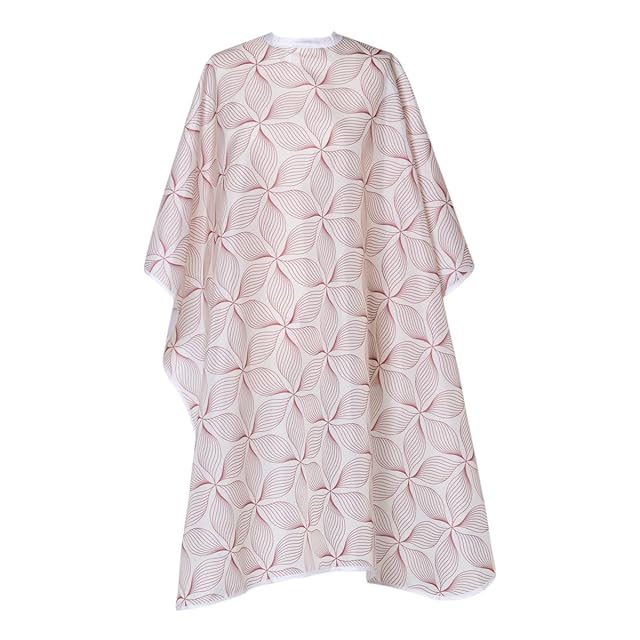
No color or pattern information, where the Fromm at $26.49 publishes a “Petals Pattern” and the omvoina at $4.99 is black.
No seam detail. The nicoc at $9.85 is the only page here to describe its construction: “Seam-over-edge design for durability” — an overlocked edge, which is what stops a cut-to-size fabric fraying, and the first thing to fail on a light one.
No antimicrobial or disinfection claim. Worth noticing on a garment worn by one stranger after another. The only disinfection on this shelf is on a mat: the Barber Strong at $35, “wiped down with a wet cloth or disinfectant wipe”.
No warranty. Not at least one of the eight items on this shelf publishes one.
No country of manufacture, which no item on this shelf publishes.
Availability
Read on the day this page was built: $7 at the American Amazon shop.
Read from Keepa on the day this page was last revised; stock and price both move without notice.
Prices quoted in this text were read on 2026-10-05. The live price is at the top of the page.