What the maker puts in writing
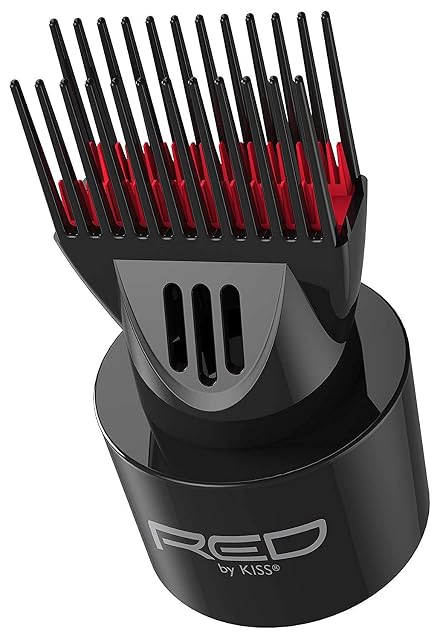
- “Efficient Double Layer Detangling: Featuring expertly crafted teeth, this comb ensures hassle-free detangling with its robust double-layer mechanism. Ideal for those with curly, wavy, or knotted hair, it guarantees a silky-smooth and manageable finish every time”
- “Compatibility and Pecision : Precision-engineered, this comb boasts a design compatible with most hair dryers. Whether you own a salon-grade dryer or a household variant, this comb ensures a seamless fit and enhanced styling experience”
- “Versatile for All Hair Types: Not only does it maintain straight hair impeccably, but it’s also a go-to tool for those with curly, natural, or black hair aiming for a straightened look”
- “Optimized for Weaves, Wigs, & Extensions: This comb drastically reduces drying time for weaves, wigs, and extensions. Ensures your hair remains smooth and straight without compromising its health”
- “Built for Durability: Constructed from heavy-duty nylon, this comb is designed for longevity. Its heat-resistant properties and sturdy build eliminate concerns of broken or bent teeth, making it a trusted tool for everyday use”
- From the name: “Detangling Blow Dryer Hair Styling Pik”, “Double Layer Pik Attachment”, “Wigs, Weaves & Natural Hair”
- Reference UBPIK01 · Catalog: 141 g (5 oz), 83 × 81 × 154 mm (3.27 × 3.19 × 6.06 in)
Two rows of teeth, which is the only mechanism on this shelf
“this comb ensures hassle-free detangling with its robust double-layer mechanism”
How two rows work.
The front row meets the tangle first and takes the coarse work. It separates the mass into sections it can pass through, and anything it cannot pass it opens rather than dragging.
The second row, set behind and offset, catches what the first row left — because a tooth in the gap between two front teeth meets exactly the hair that slipped between them.
So the effect is two passes with a single-row comb, in one movement.
Which matters on this tool more than it would on a hand comb, because of what it is attached to.
A pik on a dryer is held in a flow of hot air, and the hair is being dried as it is combed.
A tangle left behind by the first pass dries into the shape it was in — so a second row that catches it in the same stroke is working on hair that is still damp and still pliable.
That is the difference between a detangle and a set tangle.
And it explains the bullet about wigs and extensions. “This comb drastically reduces drying time for weaves, wigs, and extensions.”
A wig or a weave is hair that cannot be combed on a head with any force — the attachment points will not take it — so a tool that opens it gently while it dries is doing a job a brush cannot.
The other attachment on this shelf does the opposite thing to the same air.
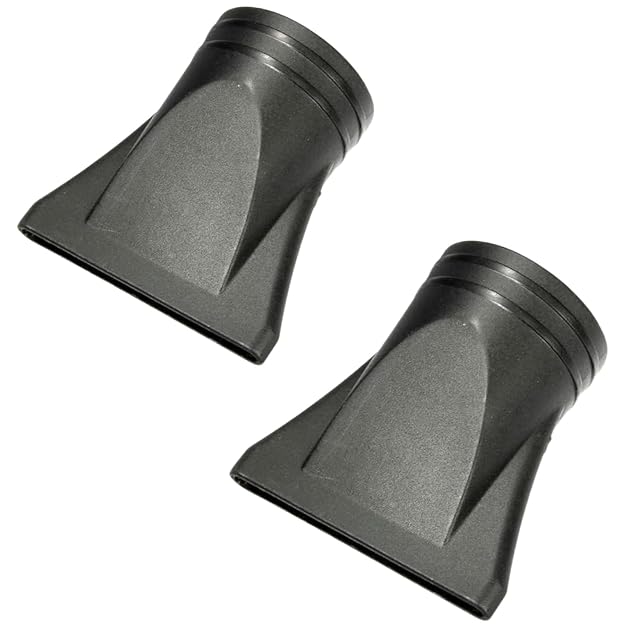
The Seadiquiet nozzles at $7.58 narrow the opening so the air leaves faster and straighter — though that page claims both an “extra-wide mouth” in bullet one and “concentrated airflow” in bullet five, which are opposite things.
A pik widens the air and breaks it up through teeth.
Fast and narrow is for smoothing a section held taut. Wide and combed is for drying a volume of curl without flattening it.
Which is the real division of this two-item shelf, and neither page states it.
Heavy-duty nylon, which is the only material named here
“Constructed from heavy-duty nylon, this comb is designed for longevity. Its heat-resistant properties and sturdy build eliminate concerns of broken or bent teeth.”
Why nylon rather than a cheaper plastic.
A pik sits in the hottest part of a dryer’s airflow, continuously, for as long as the dryer is running — and it is also the part doing mechanical work, dragging through tangles under tension.
Nylon is the combination. It is tough rather than brittle, it has some flex before it breaks, and it does not soften until well above anything a domestic dryer produces.
Which is why it is the standard material for a comb used in heat.
The failure it prevents is the one the bullet names: “broken or bent teeth”.
A tooth on a dryer pik is a cantilever in hot air — and a cheap polystyrene or ABS tooth, warm and loaded, takes a set and then snaps.
A pik with one bent tooth catches every time it passes that point. A pik with a missing tooth leaves a stripe.
And the comparison on this shelf is stark.
The Seadiquiet nozzles at $7.58 name no material at all. Their closest claim is “PROFESSIONAL QUALITY: Salon-grade construction designed for daily use in professional hairdressing environments” — an adjective about an environment rather than a substance.
At 3 g (0.1 oz) each those are thin moldings. This is a 141 g (5 oz) part with a stated polymer.
How hot the air actually is, which neither page publishes.
A hair dryer is the hottest airflow on this site.
On GroomVerdict’s own air-stylers shelf the highest published figure is 110 °C (230 °F) / 230 °F, on the AVENHO WT-665 — because an air styler deliberately runs cool and lets the airflow do the shaping.
The curling-tools shelf reaches 450 °F, on the Hot Tools waver — but that is a metal barrel in contact with hair rather than moving air.
A domestic dryer on full heat sits between the two.
And the practical rule that follows is the one no page here gives: if the dryer has a cool-shot or a low-heat setting, a pik is the attachment to use it with. Combing hot is what damages hair; combing warm is what shapes it.
A hundred and forty-one grams, and what that does to a dryer
The catalog reads 141 g, at 83 × 81 × 154 mm.
Against 6 g (0.2 oz) for the pair of nozzles on this shelf — about 3 g (0.1 oz) each.
A factor of forty-seven between the two objects in this family, which is the clearest illustration of how different they are.
And it raises a fit question neither page addresses: weight on the nose.
A dryer with 141 grams clamped to its outlet is a dryer whose balance has changed. The mass sits at the far end of the lever, so it pulls forward in the hand — and a dryer held at arm’s length above a head, for twenty minutes, is already the arm position people complain about.
Which is tolerable on a salon dryer and noticeable on a light domestic one.
So “whether you own a salon-grade dryer or a household variant” in bullet two is not a distinction without a difference — it is just that the page draws it about fit and the real difference is about mass.
For scale within this site: on GroomVerdict’s air-stylers shelf the whole tools run from 800 g (28.2 oz) to 1500 g (52.9 oz), with three pages claiming to be lightweight and two of those publishing no weight at all. Adding 141 g (5 oz) to the far end of a 1500 g (52.9 oz) tool is a real change.
The dimensions are also the clearest on this shelf, and the only credible ones. The Seadiquiet nozzles catalog at 25 × 3 × 3 mm (0.98 × 0.12 × 0.12 in), which cannot describe a nozzle of any kind — a 3 mm (0.12 in) nozzle would not pass over the outlet ring of any dryer made.
Compatible with most dryers, and no diameter
“this comb boasts a design compatible with most hair dryers. Whether you own a salon-grade dryer or a household variant, this comb ensures a seamless fit”
How these attachments mount.
A dryer’s outlet ends in a raised ring, and the attachment is a collar that pushes over it with an interference fit — sometimes with a bayonet lug, sometimes friction alone.
So the question of fit is a question about one number: the outside diameter of that ring.
Not published here. And not published on the Seadiquiet nozzles at $7.58 either, whose own bullet claims “UNIVERSAL FIT: Compatible with most standard hair dryer models.”
Two attachments, two universality claims, and no diameter on either page.
“Most standard” is doing a lot of work, because there is no standard. Outlet rings cluster around a few sizes because dryers copy one another — which is why third-party attachments exist at all — and a dryer at the edge of that cluster takes nothing but its own.
It is the same gap this park has met before on a very different shelf. A sous-vide container lid sold with a pre-cut hole, “tested for ANOVA and CHEFSTEPS machines”, which asks the buyer to “confirm the suitability of your machine according to the size of pre-cut hole” and never publishes the hole’s diameter.
The practical check, since neither page helps: measure the outside diameter of your dryer’s outlet ring with a ruler before buying.
At $8.49 the cost of being wrong is small — and the nozzles beside it come two to a pack precisely because an attachment is a thing that gets dropped and lost.
What it is for, and the one thing it is wrong for
“it’s also a go-to tool for those with curly, natural, or black hair aiming for a straightened look” · “drastically reduces drying time for weaves, wigs, and extensions”
Why a pik is the right tool for curly and coily hair in particular.
Curl dries into whatever shape it is left in. So the two things curly hair needs from a dryer are opposite to what straight hair needs: the air must not be a jet, and the hair must be held open while it dries.
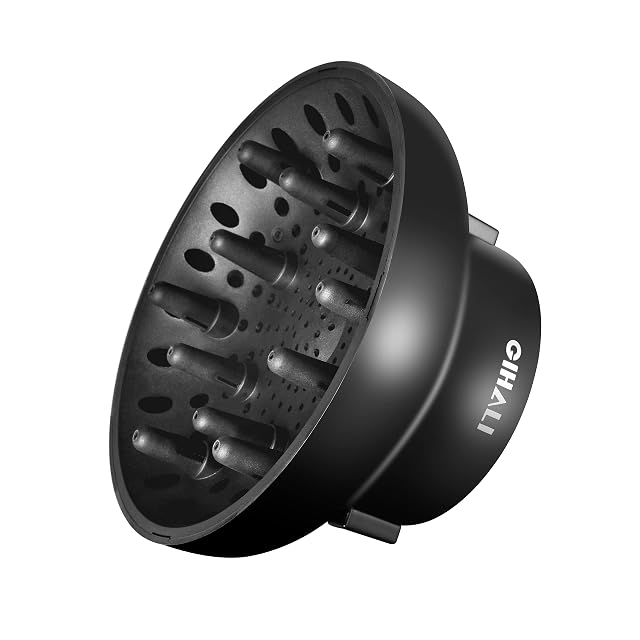
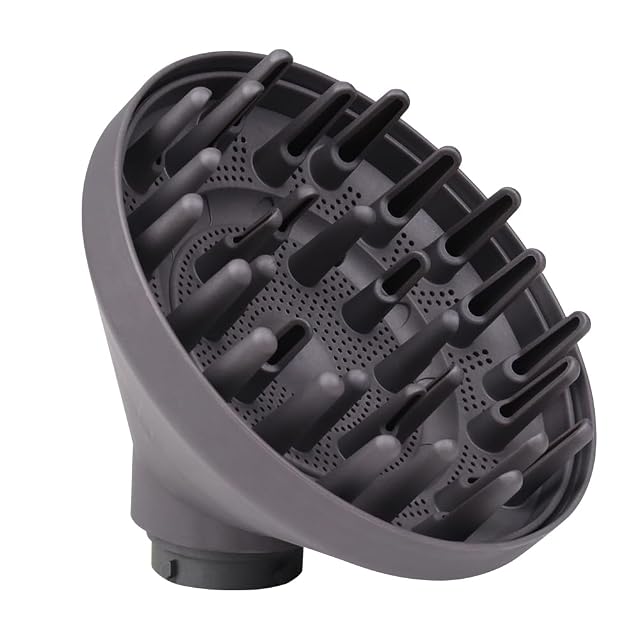
A concentrator nozzle fails on both counts. Fast directional air separates the strands that make up a curl clump, and a separated clump is frizz — which is exactly why the air-stylers shelf on this site has one item with a diffuser and five without, and why that diffuser page is the one that explains it: the oudim at $46.50, whose “removable diffuser distributes airflow across a wider area… while maintaining curl definition.”
A pik does the second half of that job: it holds the hair open, in sections, while slow air passes through.
And it does a third thing a diffuser cannot: it combs. Which is the whole point for hair being dried toward a straightened look, and for a wig or weave that has tangled.
What it is wrong for is the blow-out.
A smooth, straight finish on naturally straight or wavy hair is made by tension and directed air: the hair held taut on a round brush, air aimed down its length, cuticle laid flat.
A pik spreads the air and holds the hair apart, which is the opposite of tension — so for that job the nozzle on this shelf is the right attachment and this is not.
“Maintain straight hair impeccably” in bullet three is the one claim here that pulls against the tool’s own design.
What is not published
No mounting diameter, as above.
No tooth count. Which is the first figure a pik has, and it decides how coarse the detangle is. For comparison, this site publishes a tooth count elsewhere twice: a 17-tooth curl brush appears on the air-stylers shelf at $7.99 and again on the curling-tools shelf at $4.35, both of which name the number.
No tooth length or pitch. Length decides whether it reaches the root through a volume of curl; pitch decides what it will pass through. And on this shelf, a double-layer pik has two pitches to publish and publishes neither.
No row offset. The whole mechanism is that the second row sits in the gaps of the first, and nothing says by how much.
No temperature limit, as above, on the one page here that claims heat resistance.
No cleaning statement. A pik collects shed hair between its rows and product spray on its teeth, and nylon takes soap and water perfectly well — which no page says.
No weight caution, as above.
No warranty. Several of the four items on this shelf publishes one — which across this site is the norm: not one item on capes-and-mats, blade-care, clipper-blades or combs-and-brushes publishes a term, and one of six on air-stylers does.
No country of manufacture, which neither item on this shelf publishes.
Availability
Read on the day this page was built: $8 at the American Amazon shop.
Read from Keepa on the day this page was last revised; stock and price both move without notice.
Prices quoted in this text were read on 2026-10-05. The live price is at the top of the page.