What the maker puts in writing
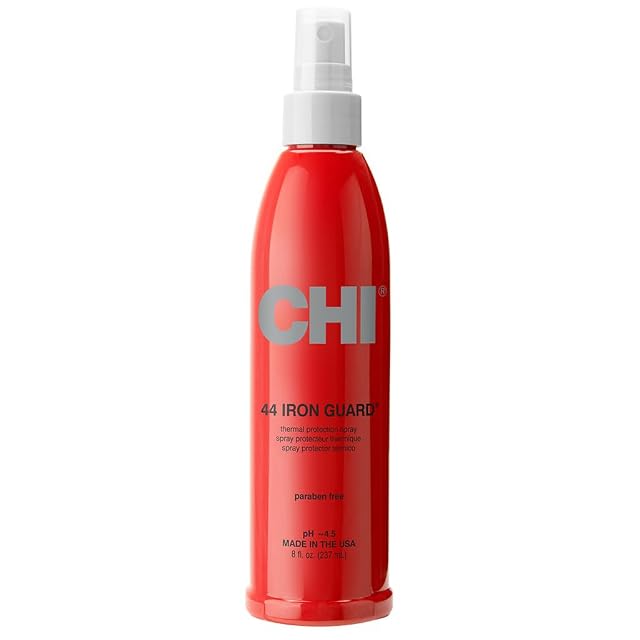
- “HEAT PROTECTION: Shields hair from high-heat styling tools up to 450°F while preventing heat damage and breakage for smoother, stronger strands with every blow-dry, curl, or flat-iron use.”
- “WEIGHTLESS FORMULA: Lightweight, non-greasy spray instantly absorbs without buildup, leaving hair soft, shiny, and manageable without weighing down fine or thick hair.”
- “ANTI-FRIZZ FOR SMOOTH HAIR: Helps tame frizz and seal the cuticle for sleek, polished results in humid or dry conditions — ideal for all hair types and daily styling routines.”
- “ALL-DAY STYLE RESILIENCE: Enhances natural shine and helps styles last longer with improved texture, manageability, and frizz control for salon-like results at home.”
- “CHI: Founded by Farouk Shami, a hairdresser allergic to ammonia who sought to create the first ammonia-free hair color & has remained committed to crafting the finest ethical haircare. All CHI products are cruelty-free, paraben-free, & sulfate-free.”
- From the brand story: “CHI haircare and tools are manufactured by Farouk Systems a Houston based company.”
Forty-four of what?
The product is called “44 Iron Guard”, and none of the five bullets mentions the 44.
What it is not.
Not the temperature — the page states 450 °F, like seven of the eight other items here.
Not a volume — none appears anywhere on the page.
Not a count of ingredients, a pH, a percentage, or a year any bullet refers to.
So a buyer meets a number in the product name and finds no explanation of it on the product page.
Which matters more on this shelf than it would elsewhere.
This is a category where almost nothing is quantified.
Eight of nine items publish the same single number, 450 °F — and that number turns out to be the maximum setting of nearly every consumer flat iron rather than a measured protection limit.
Beyond it, the shelf is adjectives: weightless, lightweight, non-greasy, smooth, sleek, polished.
On a shelf this short of figures, an unexplained number in a product name is a missed opportunity rather than a trivial omission.
The fifth bullet is a biography
“Founded by Farouk Shami, a hairdresser allergic to ammonia who sought to create the first ammonia-free hair color”
Ammonia-free hair color has nothing to do with a thermal spray.
And the half of that bullet which is about this bottle is genuinely useful: “All CHI products are cruelty-free, paraben-free, & sulfate-free.”
What each one is worth in this format.
Sulfates are detergents — the cleansing agents in shampoo. A leave-in spray is not a cleanser, so “sulfate free” is close to automatic here: there is no reason for a protectant to contain one.
Parabens are preservatives. A water-based spray does need a preservative, so “paraben free” means a different preservative system is in use — a real formulation choice rather than an absence.
Cruelty-free is a definable claim about testing and is the one that does not depend on the format at all.
Who else publishes a list.
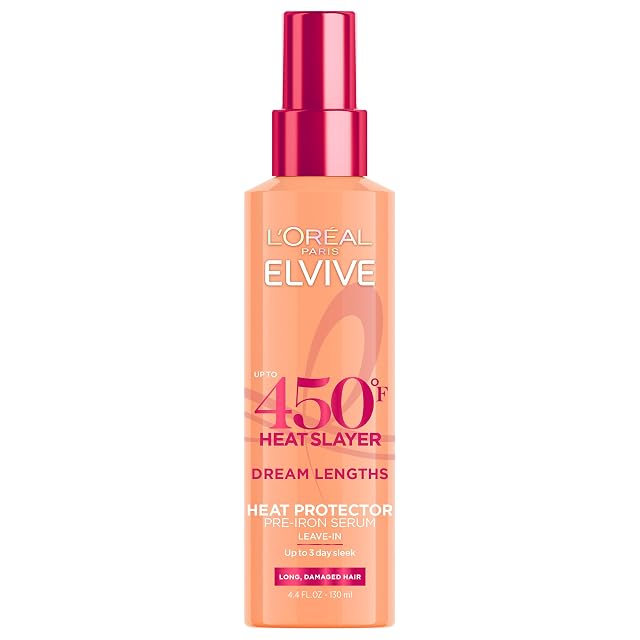
L’Oreal Paris, $8.99 — “sulfate free, paraben free, dye free”
OGX, $10.47 — “formulated without dyes or parabens”
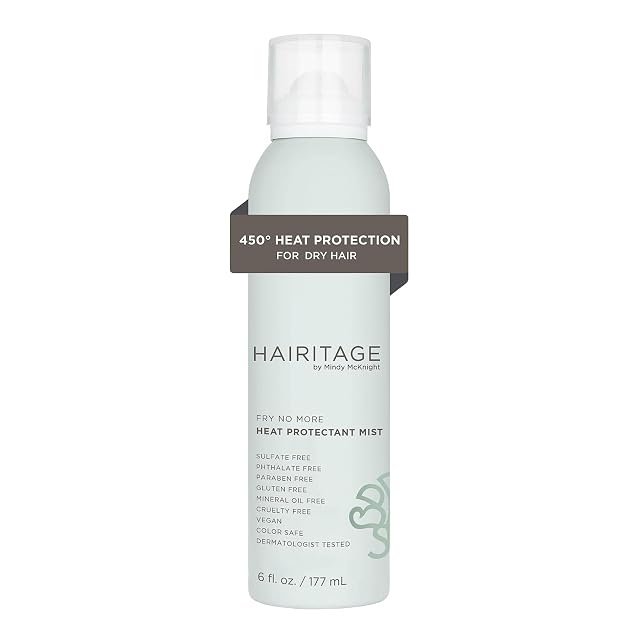
Hairitage, $8.94 — “cruelty-free”, plus “environmentally friendly” with nothing behind it
And five pages publish nothing of this kind
The brand-story block also contains the nearest thing to a manufacturing statement on this shelf: “CHI haircare and tools are manufactured by Farouk Systems a Houston based company.”
No item on this shelf publishes a proper country of manufacture, so a named company and city is more than the other eight give.
For comparison, the only other page that spends a bullet on the corporation is the L’Oreal Paris at $8.99, whose fifth bullet is “A leading total beauty care company based in Paris” — and whose third and fourth bullets are about other products in its range.
“Seal the cuticle”, which is the nearest thing here to a mechanism
“Helps tame frizz and seal the cuticle for sleek, polished results in humid or dry conditions”
What the cuticle is.
The outside of a hair shaft is made of overlapping scales, like roof tiles, lying flat along the strand.
Flat, the hair is smooth, shines, and holds its water in. Lifted — by bleaching, abrasion, alkalinity or heat — it looks dull, catches on itself (which is frizz), and loses water quickly.
So “seal the cuticle” describes flattening and smoothing those scales, and it is a genuine thing a conditioning agent does.
Why it is half the mechanism of heat protection, and the better half to have.
The damage a hot tool does is driven by the water inside the shaft.
At iron temperatures that internal water can pass 100 °C (212 °F) and flash to steam inside the fiber, and the steam blows microscopic cavities through the cortex on its way out — the pattern known as bubble hair.
A sealed cuticle slows water leaving the hair, which moderates that event — and it also reduces the mechanical abrasion of plates dragging over a rough surface.
What it does not do is insulate.
Slowing heat transfer requires a film that conducts heat more slowly than hair does, and the film-formers that do that in most commercial heat protectants are silicones.
Not one of the nine pages on this shelf names a silicone, or any film-forming agent at all.
This page goes furthest by naming an effect on the hair rather than an ingredient — which is more than six of its rivals manage — and it names no ingredient whatsoever, which is less than three of them manage.
What the others name.
Proteins — rice protein on the Hairitage at $8.94, “smart binding hair proteins” on the OGX at $10.47, hydrolyzed keratin on the TYMO at $16.99, a “Honey Protective Complex” on the Bumble at $17.00, “STYLEPROTECT Technology” on the Nexxus at $13.99
Oils — argan on the Hairitage, argan and panthenol on the Moroccanoil at $15.00, argan on the TYMO
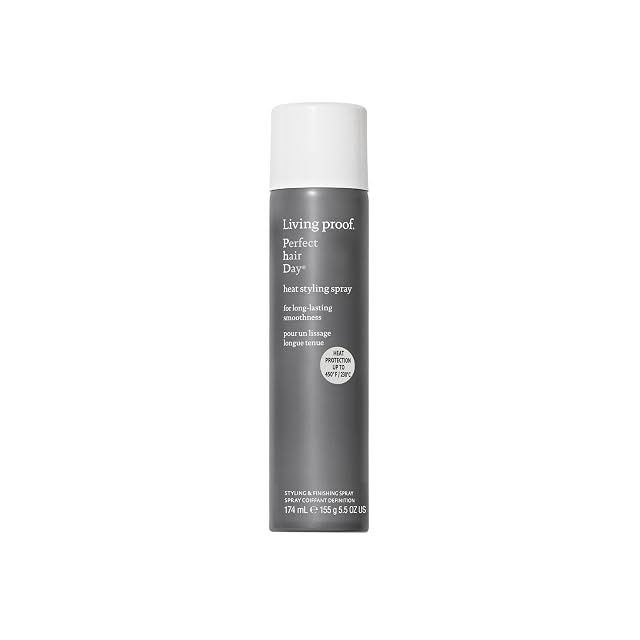
Nothing at all — this, the L’Oreal Paris at $8.99, and the Living Proof at $34.00
And oil is the wrong mechanism: it conducts heat rather than insulating, and it has a smoke point, so at 230 °C (446 °F) an oil on a plate is being cooked.
The “humid or dry conditions” clause is worth keeping, because it is a real distinction. Frizz in humidity is water going INTO the hair and swelling it; frizz in dry air is water leaving and the cuticle lifting. A sealed cuticle slows traffic in both directions, so the claim is coherent.
“with every blow-dry, curl, or flat-iron use”
Small, and worth noting, because the three are not equivalent.
A blow dryer is warm moving air at a distance. A curling wand is sustained contact on a wrapped section. A flat iron is metal plates clamped on a strand at up to 230 °C.
The iron is the hardest case by a distance, which is why the product is named for it.
And it is the reason the OGX page at $10.47 splits its instruction in two: damp hair before the dryer, dry hair before the iron. A dryer is how the water gets out; an iron closing on hair that still holds water is where the steam damage happens.
This page names all three tools and gives no instruction for any of them.
What is not published
No explanation of the 44, as above.
No ingredient of any kind, as above.
No application instruction. The OGX at $10.47 publishes the only real routine on this shelf, and every part of it is right: a spray distance of “6-8 inches”, a geography of “mid-length to ends (avoiding roots)”, and a two-stage split between the dryer and the iron. The Hairitage at $8.94 gets the water question backwards (“wet or dry hair before blow drying or using any hot styling tools”), and the Bumble at $17.00 gets the simple version right (“protects dried hair”). On a product named for ironing, saying nothing is the gap that matters most.
No volume. One page publishes one: the OGX at $10.47, “6.5 fl oz”, about $1.61 per fluid ounce. The Bumble at $17.00 declares itself a “Mini Travel Size”. Everything else, including this, is a price with no quantity — so $13.99 cannot be compared with $8.94 or $34.00 in any meaningful way. On a spray, price per ounce is the whole of the value question.
No study or evidence. Two pages cite something, and this product’s exact price neighbor is one of them: the Nexxus at $13.99 — “89% agree hair felt moisturized In a salon study with 45 consumers on 11.3.2021” — which names a sample size, a date, and a measure that announces itself as perception rather than strength. The OGX at $10.47 publishes three footnoted figures whose footnote text appears nowhere on its page. At the same $13.99 as the Nexxus, this page offers adjectives and a founder’s biography.
No degree of protection. Nothing on this shelf publishes how much cooler the hair runs, what proportion of damage is prevented at a stated temperature, how long the film lasts, or how many passes of an iron it survives. “Up to 450 °F” is a ceiling with no measurement underneath it, and eight of nine items here publish the same one.
No hold statement. One page settles it, twice: the Moroccanoil at $15.00 — “no-hold… blending seamlessly into any existing styling regimen”. The Living Proof at $34.00 claims the opposite: “Enduring Style: Maintains style for extended periods.” This page’s “helps styles last longer” leans toward hold without saying so, which matters when layering: a protectant with any hold interferes with what goes on after it.
No UV filters. One item here claims them, and it is the only additional protective claim anywhere on this shelf: the Bumble and bumble at $17.00 — “Added UV Filters help protect hair against the drying effects of the sun.”
No color-safety statement. Two pages make one — the Bumble at $17.00 and the Nexxus at $13.99 (“protects vibrancy after styling”) — and heat is what lifts color, so a protectant used before an iron is exactly where the claim belongs. From a brand whose own origin story is about hair color, the omission is a surprise.
No country of manufacture, though “manufactured by Farouk Systems a Houston based company” is closer than anything else on this shelf offers.
Availability
Read on the day this page was built: $14 at the American Amazon shop.
Read from Keepa on the day this page was last revised; stock and price both move without notice.
Prices quoted in this text were read on 2026-10-05. The live price is at the top of the page.