What the maker puts in writing
- “WEED WHACKER 2.0: Fitted with a significantly improved stainless steel rotary blade, our second-generation nose & ear hair trimmer provides a closer, easier cut, missing fewer hairs.”
- “A CUT ABOVE THE REST: A premium 7,000 RPM motor powers our new 360° rotary dual-blade system so you experience a clean and close cut.”
- “UNPLUG. UNHAIR: With a USB-C rechargeable battery, this nose and ear hair trimmer operates on its own power supply with up to 45 minutes of runtime.”
- “MIND YOUR MANHOLES: Get more precision in your prep with a matte, rubberized grip that’s easy to hold and gets where it needs to go. Our trimmer works in wet and dry conditions, so you can use it in the shower or rinse it off under the faucet.”
- “ATTRACT THE RIGHT ATTENTION: If you’re starting to notice a few unruly hairs creeping out of your nose and ears, don’t panic.”
Seven thousand RPM, called premium, and it is the lowest here
“A premium 7,000 RPM motor powers our new 360° rotary dual-blade system”
The shelf.
10,000 RPM — the XOOMRSCP at $16.99, which is $7 cheaper
8,500 RPM — the JEETIF at $16.99, also $7 cheaper
7,000 RPM — this, at $23.99, described as premium
Not published — the ZORAMI at $9.99 (an “upgraded motor… less power-consuming by 5%”, no baseline), the Conair at $13.29, the ROYAL at $15.99 (entirely manual), the Norelco at $24.96, the Dollar Shave Club at $29.20, and the MANSCAPED Weed Whacker 3.0 Pro at $39.97 — this product’s own successor
So the most expensive page here to publish a figure publishes the lowest one.
Why that may well be the right choice, and the page never argues it.
On a rotary trimmer the mechanism is shearing: a blade turns inside a slotted guard, hair enters the slots, and it is cut between the moving blade and the fixed edge of the slot.
What decides whether it cuts or pulls is whether the edge parts the hair or compresses it first — a function of sharpness and edge angle, not of speed.
The one page on this shelf to name a geometry is the Conair at $13.29: a “beveled blade system”, where a bevelled edge starts the cut at a point and a square one pushes before it parts.
And speed has a cost that exactly one page here names: friction heat.
Metal moving against metal thousands of times a minute generates heat at the contact, and inside a nostril that heat has nowhere to go — the guard is surrounded by warm moist tissue, and the tool is held still against skin.
The JEETIF at $16.99, with 8,500 RPM, is the only page to raise it: “the blades are engineered to prevent friction heat, protecting your skin from burns.”
So a lower speed is a smaller heat problem, and this page could have said so.
What it says instead is comparative with no baseline: “significantly improved stainless steel rotary blade” and “A CUT ABOVE THE REST”.
Improved over what? Presumably the Weed Whacker 1.0, which is not on this shelf — so the comparison cannot be checked from here.
The honest observation about “premium” on the lowest figure: either the word is doing work the number cannot, or the maker has decided, correctly, that RPM is not the specification that sells a nose trimmer.
The far end of the shelf agrees. The ROYAL at $15.99 has no motor at all, publishes “12 dual-edged blades” instead — the only blade count here — and is the only item on this shelf with a patent number.
The grip, which is the only ergonomic claim on this shelf
“a matte, rubberized grip that’s easy to hold and gets where it needs to go”
Why grip is a real variable here.
A nose trimmer is a short, narrow cylinder, held in a pinch rather than a fist, close to the face, with fine control required — and frequently with wet hands, because this page sells shower use.
A smooth plastic barrel in a wet hand is a tool that rotates when you do not want it to.
And rotation is exactly what you are controlling. The whole technique is inserting a guard slowly and turning it — which the one page on this shelf with a usage instruction spells out: the XOOMRSCP at $16.99, “slowly insert the comfortable cone tip into your nose or ear. Allow the nose trimmer to trim hair for at least 60 seconds.”
So a grip that does not slip lets you do that deliberately rather than approximately. And the matte finish is the other half: a gloss surface is slippery before it is wet.
No other page on this shelf names a grip, a diameter, a weight or a shape.
Its own successor adds the generic version — the MANSCAPED Pro at $39.97: “ERGONOMIC DESIGN: Sleek, easy-to-grip build for improved control” — which is the same claim with the material removed.
Wet and dry, with no rating behind it
“works in wet and dry conditions, so you can use it in the shower or rinse it off under the faucet”
A capability claim with no rating, and three pages on this shelf do better — including this product’s own successor.
MANSCAPED Pro, $39.97 — the most complete statement here: “IPX7 rated to protect against immersion in up to one meter of fresh water for up to 30 minutes”
Dollar Shave Club, $29.20 — “IPX7-rated… protected from temporary immersion for up to 30 minutes”
ZORAMI, $9.99 — IPX7, plus “soak cleaning or having it take a shower”
ROYAL, $15.99 — “water-resistant”, with no battery or motor inside to protect
this — “wet and dry conditions”
Washable head only — the Conair at $13.29, the JEETIF at $16.99, the XOOMRSCP at $16.99
Nothing at all — the Norelco at $24.96
So the same brand publishes a full IPX7 definition one generation later, and this page publishes a phrase.
Why rinsing matters on this tool for a mechanical reason rather than a hygienic one.
What a nose trimmer cuts is short, fine and wet. The cuttings come out mixed with moisture and pack into the slots of the guard rather than falling out.
Which is exactly how one of these stops working: hair cannot enter the slots, the blade cannot reach it, and the tool pulls instead of cutting.
And pulling is the failure every page on this shelf promises to avoid — including this one, which claims a cut “missing fewer hairs”.
So rinsing is the maintenance that keeps it cutting, and shower use is the reason the rating would have been worth publishing.
Forty-five minutes, which is the wrong unit
“a USB-C rechargeable battery… with up to 45 minutes of runtime”
45 minutes of continuous runtime on a tool used for a minute at a time is 45 uses.
Which sounds generous, and is governed by something else entirely.
A nose trimmer is used for about a minute, once a week at most. So it spends essentially its whole life in a drawer — and a lithium cell left for six weeks self-discharges.
Which means the figure that actually governs this tool is not runtime but how much charge is left when you pick it up.
No page on this shelf publishes that.
Two publish the figure in the right unit instead.
ZORAMI, $9.99 — “more than 6 months for 5mins’ of use at a time”, on one AA
XOOMRSCP, $16.99 — “two minutes of continuous use for 2-3 months each time”
And four publish continuous minutes: the JEETIF at $16.99 at 120 — the longest and least relevant figure here — the Dollar Shave Club at $29.20 and the MANSCAPED Pro at $39.97 at 60 each, and this at 45, which is the shortest.
The three real answers to the drawer problem are elsewhere on this shelf.
The ROYAL at $15.99 cannot go flat: “operated entirely by manual control without batteries or charging cords.”
The JEETIF at $16.99 tells you before you start: an “HD digital display” showing the remaining battery percentage.
And this product’s own successor, the MANSCAPED Pro at $39.97, ships a travel lock — “press and hold the lock button for 3 seconds” — which stops the tool running itself flat in a bag.
This page has none of the three, and USB-C is the right connector: it is the one most people already have a cable for, which the Dollar Shave Club page at $29.20 makes its own argument from — “without expensive AA or AAA batteries.”
The brand voice, and what it displaces
The five bullets are headed “WEED WHACKER 2.0”, “A CUT ABOVE THE REST”, “UNPLUG. UNHAIR”, “MIND YOUR MANHOLES” and “ATTRACT THE RIGHT ATTENTION”.
And the fifth, in full: “If you’re starting to notice a few unruly hairs creeping out of your nose and ears, don’t panic. Once you make trimming your manholes with the Weed Whacker 2.0 part of your essential grooming routine, no one will know.”
That bullet contains no specification of any kind.
It is the fifth of five, and this page has fewer facts in it than three cheaper rivals.
What the shelf publishes that this does not.
A noise figure — “less than 50db” on the ZORAMI at $9.99 and the XOOMRSCP at $16.99, “under 60 decibels” on the JEETIF at $16.99. Which matters more on this tool than almost any other: the trimmer is inside your head, and a motor held in a nostril transmits sound through the skull straight to the inner ear, so it is far louder to you than to anyone measuring it.
An IP rating — three pages, as above
A warranty — a “Limited 5-year warranty” on the Conair at $13.29, the longest fixed term anywhere in GroomVerdict; two years on the Norelco at $24.96; a “30-day full-money-back without a lot of arguing required” on the ZORAMI at $9.99
A battery capacity or charge indicator — “600mAh” and an HD display on the JEETIF at $16.99
A usage instruction with a duration — the XOOMRSCP at $16.99
A second head — five of nine items ship one, and this does not
What this page does have is not nothing: a named grip material, a wet-and-dry claim, a dual-blade rotary system, 45 minutes of runtime, and USB-C.
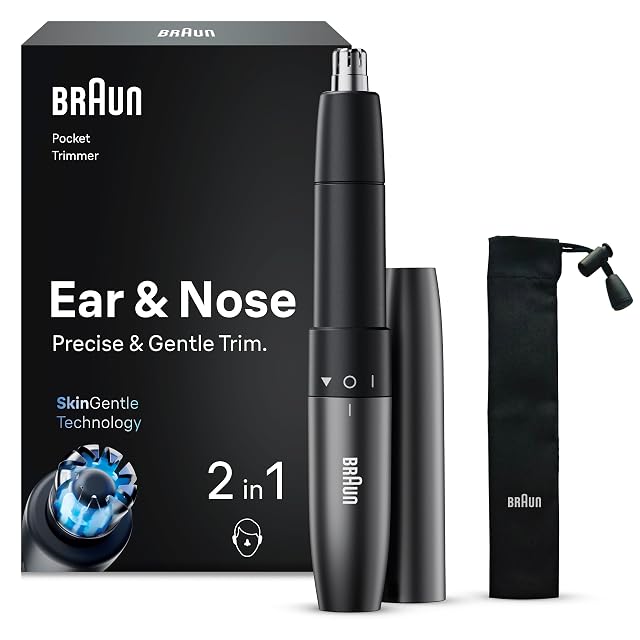
For the price, the comparison that matters is the Norelco at $24.96 — ninety-seven cents more — which adds a detail trimmer, eyebrow attachments, a pouch, a two-year warranty and the clearest safety statement on this shelf: “The Protective Guard System protects sensitive skin by providing a barrier between skin and blades.”
What is not published
No IP rating, as above.
No noise figure, as above.
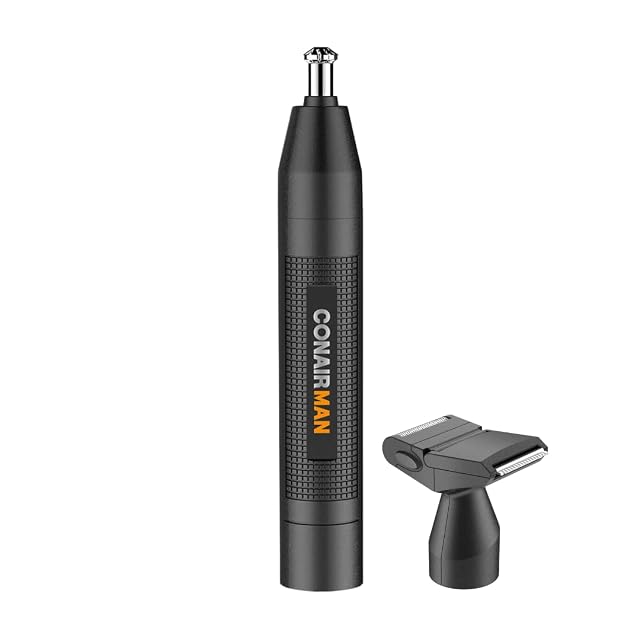
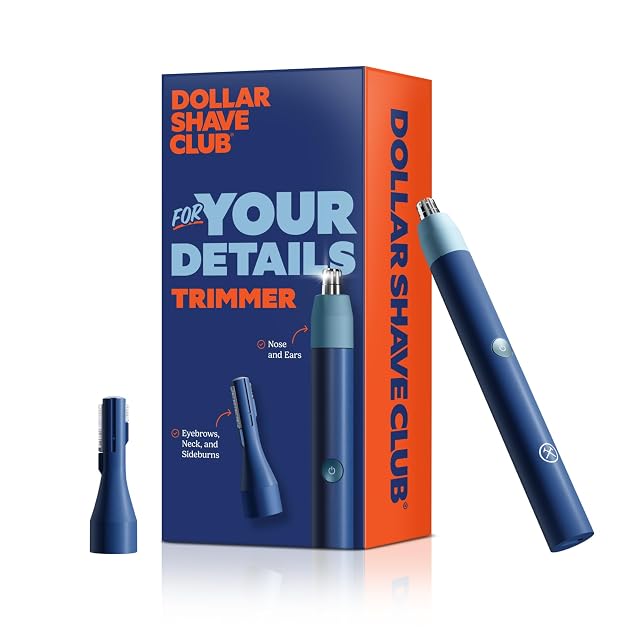
No attachments. This is a single-head tool, and five items on this shelf ship more: three heads on the JEETIF at $16.99 (nose, eyebrow, sideburn/beard); a rotary plus a detail trimmer plus eyebrow attachments plus a pouch on the Norelco at $24.96; a nose head plus a “2-in-1 Shaver/Detail Trimmer” and a pouch on the Conair at $13.29; a rotary plus a brow and detail head on the Dollar Shave Club at $29.20; and a rotary plus a “SkinSafe eyebrow trimming attachment” on the MANSCAPED Pro at $39.97. The distinction is real: a rotary head cuts whatever enters its slots in every direction at once, which is right for a nostril and cannot define a line or shorten a brow hair to a chosen length. This page is at least consistent about it — its bullets talk about nose and ears throughout and claim nothing else, which two cheaper pages do not.
No battery capacity and no charge indicator, as above.
No blade count, grade or geometry. “Stainless steel rotary blade” and “dual-blade” give a material class and a configuration. One page names a count — the ROYAL at $15.99, “12 dual-edged blades” — and one a geometry: the Conair at $13.29, “beveled”.
No guard or slot dimension, which no page on this shelf publishes and which is the figure that would actually describe how close it cuts and how little skin can reach the blade. The one page that names the guard as a system is the Norelco at $24.96.
No travel lock, which its own successor has.
No usage instruction.
No warranty. Six of nine items here publish nothing, and this is one of them — on a page whose first bullet is about being a second generation. Across GroomVerdict published terms are the exception: two years on one air styler, a lifetime guarantee on one comb, 365 days on one brush, 30 days on one clipper blade and one guide comb, and a “90-DAYS Unconditional Return + 12-Month Quality Promise” on the CIICII scissors kit at $19.98.
No country of manufacture. One item on this shelf publishes one, and it is the only one on this site: the ROYAL at $15.99 — “Manufactured in South Korea by an established company with 60 years of metal product manufacturing experience.”
Availability
Read on the day this page was built: $24 at the American Amazon shop.
Read from Keepa on the day this page was last revised; stock and price both move without notice.
Prices quoted in this text were read on 2026-10-05. The live price is at the top of the page.