What the maker puts in writing
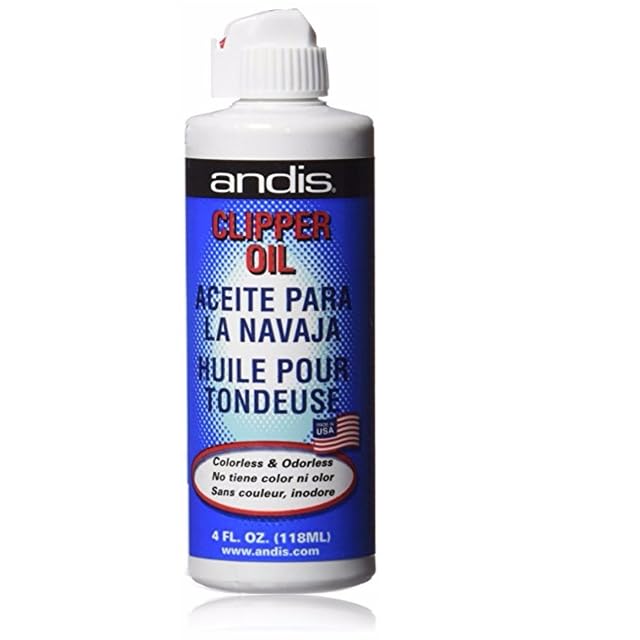
- “4 oz. bottle is resealable to prevent unwanted spills”
- “Prevents rust and corrosion on clipper and blades”
- “Works great on all clipper blades”
- “Colorless and odorless”
- “Great for shears”
- From the name: “Clipper Oil”, “4 oz”, “Pack of 3”
- Reference 12241 · Catalog: 340 g (12 oz), 119 × 43 × 127 mm (4.69 × 1.69 × 5 in)
Oil and nothing else, and that is the argument for it
At least five of the seven items here do more than one thing, or are a thing rather than a treatment.
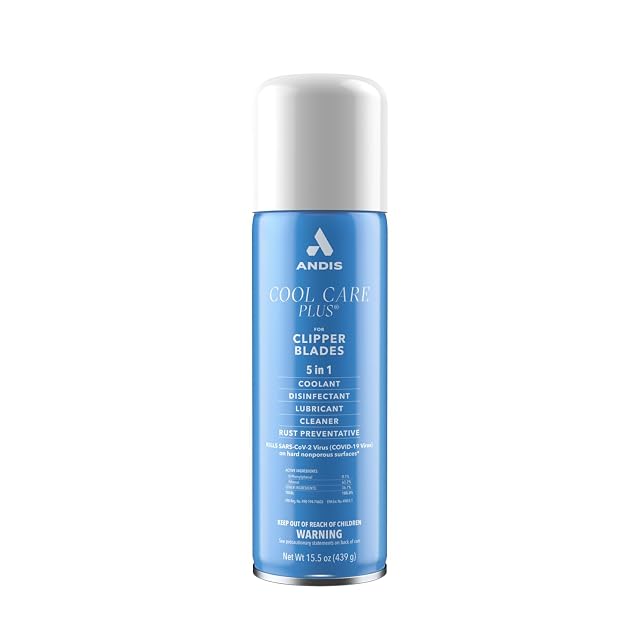
Two Andis Cool Care Plus aerosols at $12.49 and $21.45 — five functions each: coolant, disinfectant, lubricant, cleaner, rust preventative
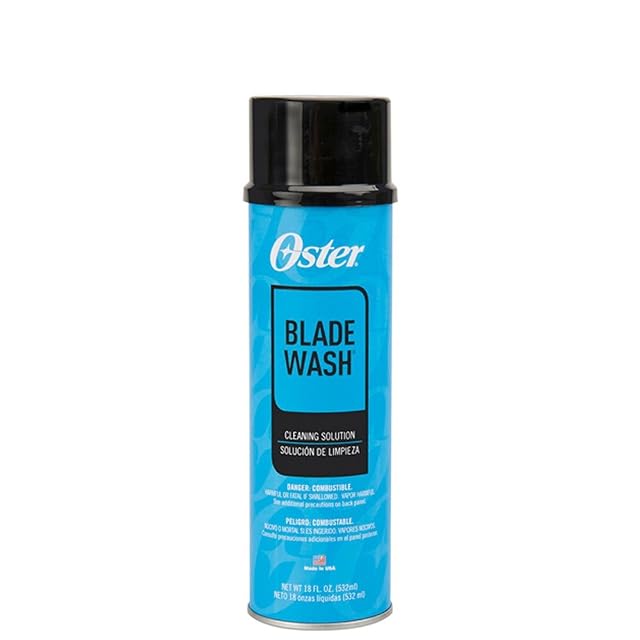
An Oster Blade Wash at $15.88 — cleaning and lubricating, plus removing factory preservatives
This is oil.
And the reason to buy it separately is the thing no page on this shelf states: the cleaner in a five-in-one removes the lubricant it leaves.
A solvent strong enough to carry packed hair and old oil out of a blade’s teeth carries away the fresh oil too. So the more you spray, the less oil is left.
A spray leaves a thin film, because the solvent flashes off and something remains. It does not leave a lubricating quantity.
So the professional order is two steps. The spray between clients, the oil at the end.
Which is why a maker that sells a five-in-one also sells a bottle of oil, and why both are on this shelf under the same brand.
What the oil does that a film cannot. A clipper blade is two plates shearing against each other thousands of times a minute, under spring pressure. That interface needs a quantity of oil, not a trace — and when it runs dry it gets hot, which is why the aerosol’s first claimed function is a coolant.
A hot blade is usually a dry blade. Cooling it treats the symptom; oiling it treats the cause.
And the third thing oil does is what this page leads with. “Prevents rust and corrosion on clipper and blades.”
Rust is water on steel, and an oiled surface has no water sitting on it — which is the same mechanism the razor-blade page on this shelf reaches from the opposite direction, by telling you to keep the blade dry and store it in a dry place.
The one product here that claims both jobs in one liquid is the Oster Blade Wash at $15.88: “Great for cleaning and lubricating clipper blades.” Which is a pour can rather than an aerosol, and a bath leaves more behind than a jet does — so the claim is more plausible there than in a spray.
Colorless and odorless, which is a two-word bullet that earns its place
“Colorless and odorless”
Why it is on the page.
This oil is applied to a tool that is then held six inches from someone’s face, for twenty minutes, while they breathe.
An oil that smells puts that smell under the client’s nose for the whole cut, and it transfers to the hair.
And a colored oil marks a white towel, a pale shirt and light hair — which is also why it matters on the shears the fifth bullet mentions. A pair of scissors cutting wet hair carries whatever is on the pivot into the hair.
What the claim implies about the oil without naming it. Colorless and odorless is the description of a highly refined white mineral oil — a clear, low-volatility petroleum distillate with the aromatics removed, which is the standard lubricant for this job and has been for a century.
The page does not say so. And no oil type, grade or viscosity is published anywhere on this shelf.
Which is the gap that matters, because viscosity is the one specification an oil has.
Too thin and it runs off the blade and into the hair. Too thick and it drags the motor and holds hair. A clipper oil is a light oil, in the region of a sewing machine oil rather than an engine oil — and this page gives no number.
What the claim is not. Odorless is not the same as food-safe, skin-safe or non-irritant, and the page claims none of those — which would be worth having on a product used at a hairline and a neckline, where a nicked skin is a real possibility.
And no page on this shelf makes a skin claim of any kind — not about an oil, and not about a material.
Twelve ounces in three bottles, and what the arithmetic says
Three 4 oz bottles is 12 oz for $13.50 — $1.13 an ounce.
Which is the most expensive liquid per ounce on this shelf, and it is not the same liquid as the others.
The volumes and the rates here:
18 oz — the Oster Blade Wash at $15.88, the largest volume on this shelf, at $0.88 an ounce
31 oz (2 × 15.5) — the Andis Cool Care Plus pack of two at $21.45, at $0.69 an ounce, the cheapest rate here
15.5 oz — the Andis Cool Care Plus single can at $12.49, at $0.81 an ounce
12 oz (3 × 4) — this, at $1.13 an ounce
So the two-pack of spray is fourteen per cent cheaper per ounce than the single can of the same product, which is the clearest arithmetic on this shelf — and comparing a spray rate to an oil rate is comparing a solvent that evaporates to an oil that stays.
A can of spray is mostly solvent and propellant by volume. A bottle of oil is oil. Which is why 12 oz of this will outlast 15.5 oz of that, and why the per-ounce figure is the wrong comparison to make between the two.
What three bottles rather than one gives you is a bottle where you need it. One at the station, one in the kit, one in reserve — and the resealable cap in bullet one is the detail that makes that work.
“4 oz. bottle is resealable to prevent unwanted spills” is a small claim about a real problem. An open-nozzle oil bottle in a bag empties into the bag.
And it is worth noting what a bottle is for, against the alternatives on this shelf. A bottle drips where you aim it. An aerosol blasts — the single Andis can at $12.49 publishes a “high-pressure, contoured nozzle” that “blasts stray hair out of teeth”. A pour can baths — the Oster at $15.88 is “Supplied as an 18 oz liquid pour can (non-aerosol)” and tells you to “wash while you clip”.
Three forms, three jobs. Drops to lubricate, a jet to clear, a bath to flush.
Where the oil goes, which the page does not say
The four bullets are a bottle, a prevention, a compatibility, a color-and-smell, and a mention of shears.
Not one of them is a method.
What the shelf gives instead, and it is thin. The Andis can at $12.49 — “a few quick sprays between each fresh cut”, the most specific dose anywhere here, and three words long. The Oster at $15.88 — “Wash while you clip”, a method without a quantity. And no page here states a care rule as a rule — clean and dry after each use, which is the plainest instruction a blade ever needs.
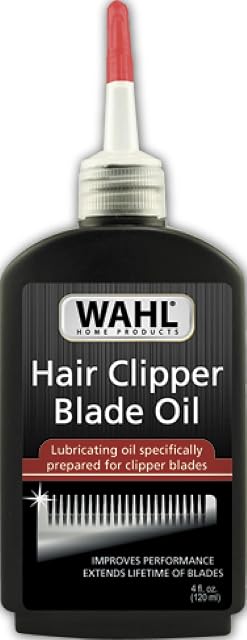
One page on this shelf does publish all three, and it is the rival oil: the Wahl blade oil at $5.99 — “Apply two drops of oil on the left corner, two drops on the right corner, and a single drop in the middle of the blades every few haircuts”, which is the only quantity on this shelf. This page gives none of it.
What the physics asks for, since the page will not say.
A clipper blade has three places that matter: the two outer corners of the cutting teeth, where the shear begins and the load is highest, and the middle of the tooth line.
Oil goes on the teeth while the clipper runs, so the motion carries it into the interface between the plates — which is the same reason the Oster page says “wash while you clip” and the same reason both Andis sprays claim to work “without removing them from the clipper”.
A drop at each end and one in the middle, with the machine running, is the whole method — and the Wahl oil at $5.99 publishes exactly that, in exactly those places: two drops on each outer corner and one in the middle, every few haircuts. And the quantity is small: oil that pools runs off into the hair.
The second thing this page implies and does not state is the order.
A new blade should be washed before it is oiled, and only one page on this shelf says why. The Oster Blade Wash at $15.88, twice: “removing factory-applied preservatives”, and “Removes factory applied preservatives from new blades.”
A new blade arrives under a heavy preservative grease that is not a lubricant. It is thick, it holds hair, and oiling on top of it makes a new blade cut worse than an old one.
Wash first, then oil. Which applies to every new blade, including the one fitted to a clipper out of its box — it arrives under the same grease.
Great for shears, which widens the product more than it looks
“Great for shears”
Worth separating from the clipper claim, because a pair of shears has a different lubrication problem.
A clipper blade needs oil on a shearing interface under spring pressure, continuously, at speed.
A pair of shears needs oil in one place: the pivot. And the pivot on a good pair of scissors is an adjustable screw with a bearing surface that sets the tension between the blades — which is the single thing that decides whether the scissors cut cleanly or fold hair.
A dry pivot stiffens, and a stiff pivot gets opened up, and a pair of shears set too loose pushes hair instead of cutting it.
So “great for shears” is one drop in one place, occasionally — a far smaller consumption than a clipper, and the reason 12 oz of oil is a long-lived purchase.
And the colorless-and-odorless claim matters as much here. Oil on a pivot ends up on the blades, and oil on the blades ends up in wet hair.
What the page does not mention is the other tool in a barber’s hand that takes oil: a straight razor. Its holder has a pivot, and the same drop of light oil suits it — and nothing on this shelf says so.
Which is the right advice for a disposable blade and the wrong advice for the holder it sits in.
What is not published
No oil type. Mineral, synthetic or otherwise — the page says only colorless and odorless.
No viscosity, as above — the one specification an oil has.
No dose and no application point, as above — which the rival Wahl oil at $5.99 publishes in full.
No frequency. The Andis spray on this shelf says “between each fresh cut”; this page says nothing about when.
No food, skin or inhalation statement. The product is used beside a face and its only descriptive claim is cosmetic.
No statement about ceramic or coated blades. An oil that suits steel-on-steel is not automatically the right choice for a ceramic or titanium-coated cutter, and plenty of clippers now ship with one. “Works great on all clipper blades” is the page’s answer and it is a claim rather than an explanation.
No storage guidance. An oil in a part-used resealable bottle keeps well; the page does not say for how long.
No disposal guidance.
No warranty. Not at least one of the seven items on this shelf publishes one, which for a consumable is reasonable.
No country of manufacture, which no item on this shelf publishes.
Availability
Read on the day this page was built: $14 at the American Amazon shop.
Read from Keepa on the day this page was last revised; stock and price both move without notice.
Prices quoted in this text were read on 2026-10-05. The live price is at the top of the page.