What the maker puts in writing
- “Rust Prevention – Prevents rust from forming & helps extend the life of the clipper & blades; can also reduce the likelihood of blades becoming dull”
- “Prolongs Blade Life – Apply two drops of oil on the left corner, two drops on the right corner, and a single drop in the middle of the blades every few haircuts for optimal blade lubrication and to reduce friction and heat”
- “Premium Formula – Wahl’s blade oil is specially designed for all Wahl electric hair clippers, trimmers, & blades; works well with other brands & blades”
- “Give the Gift of Quality - Makes a great add on gift to be combined with a clipper or trimmer”
- “The Brand Used by Professionals - Wahl clippers and trimmers have been used by professionals in the salon & barber industry since 1919; Featuring self-sharpening precision blades & quality construction”
- “Genuine Wahl Accessory – Buy with confidence knowing that you are purchasing a genuine Wahl Clipper produced product”
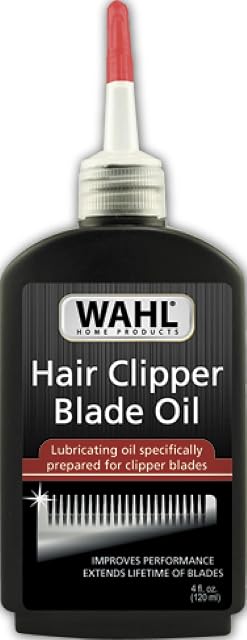
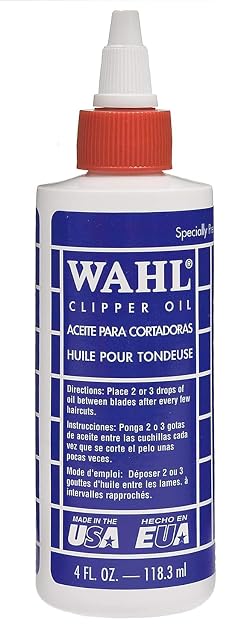
- From the name: “Premium Hair Clipper Blade Lubricating Oil”, “Clippers & Trimmers”, “4 oz”
- Reference 3310-300 · Catalog: 45 g (1.6 oz), 28 × 127 × 61 mm (1.10 × 5 × 2.40 in)
Five drops in three places, which is the only dose on this shelf
“Apply two drops of oil on the left corner, two drops on the right corner, and a single drop in the middle of the blades every few haircuts for optimal blade lubrication and to reduce friction and heat.”
Why those three places and not the whole blade.
A clipper blade is two plates shearing against each other, and the load is not even across the tooth line.
The two outer corners are where the shear begins and ends on every stroke, so they see the most work and run the hottest — which is why they get two drops each and the middle gets one.
And why the quantity is small. Five drops is a fraction of a milliliter. Oil that pools runs off the blade into the hair and onto the client — so the right amount is enough to wet the interface and no more.
The frequency is the other half. “Every few haircuts” rather than every one, which is a real distinction: an oil film survives several cuts, and over-oiling is a genuine fault rather than harmless excess.
How this compares with the rest of the shelf.
The Andis clipper oil at $13.50 — the direct rival, three 4 oz bottles — publishes four bullets and not one of them is a method: a resealable bottle, rust prevention, works on all clipper blades, colorless and odorless, great for shears
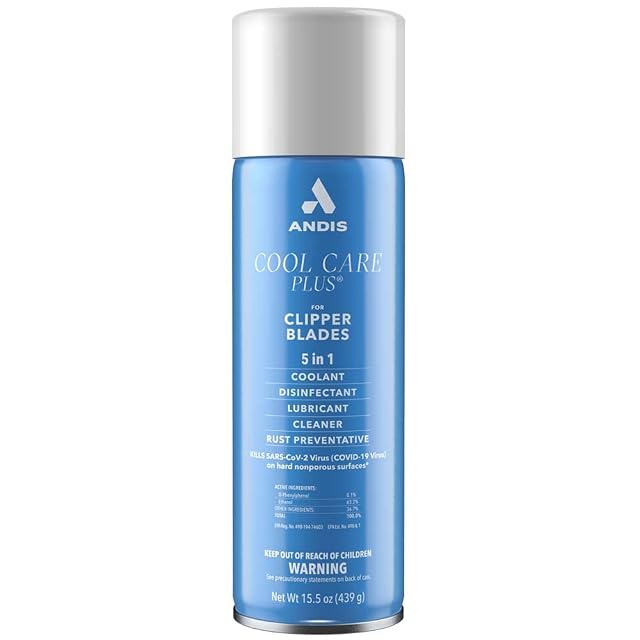
The Andis Cool Care Plus can at $12.49 — “a few quick sprays between each fresh cut”, which is a rhythm without a quantity
The Andis Cool Care Plus pack of two at $21.45 — nothing at all about how much
The Oster Blade Wash at $15.88 — “Wash while you clip”, a method without a quantity
So one page in seven tells you what to do with the bottle in your hand.
The practical sequence this fits into, which no single page here sets out in full.
Cut the length down first — which no page on this shelf says, and which does more for a blade than any liquid on it
Clear the teeth as you go — the Andis can’s “high-pressure, contoured nozzle” that “blasts stray hair out of teeth… without having to detach the blade”.
Wash at the end of the day — the Oster’s dip-the-running-blade bath.
And oil after washing — five drops, three places.
Oil before washing is wasted, because the solvent takes it off again. Which is the one thing no page on this shelf states and every page on it implies.
Two oils on one shelf, and each publishes what the other does not
The rates first.
This: 4 oz for $5.99, which is $1.50 an ounce.
The Andis clipper oil at $13.50: three 4 oz bottles, 12 oz, which is $1.13 an ounce.
So the Andis is twenty-five per cent cheaper per ounce and comes as three bottles rather than one — which has a practical value of its own: one at the station, one in the kit, one in reserve. And the Andis page publishes the cap: “4 oz. bottle is resealable to prevent unwanted spills.”
The full set of rates on this shelf, for comparison:
$0.69 an ounce — the Andis Cool Care Plus pack of two at $21.45, 31 oz, the cheapest rate here
$0.81 an ounce — the Andis Cool Care Plus single can at $12.49, 15.5 oz
$0.88 an ounce — the Oster Blade Wash at $15.88, 18 oz, the largest single volume
$1.13 an ounce — the Andis clipper oil at $13.50
$1.50 an ounce — this
Though a spray rate and an oil rate are not comparable. A can of spray is mostly solvent and propellant by volume; a bottle of oil is oil — so four ounces of this will outlast fifteen of an aerosol, and the per-ounce figure compares like with like only within a form.
What this page publishes that the Andis does not.
The dose and the three application points, as above
The mechanism it is treating — “to reduce friction and heat”, which names the actual problem rather than its symptom
And a second-order claim nothing else here makes — “can also reduce the likelihood of blades becoming dull”
What the Andis publishes that this does not.
“Colorless and odorless” — two words that matter on a product applied to a tool then held six inches from a face for twenty minutes, because an oil that smells puts that smell under the client’s nose, and a colored oil marks a white towel, a pale shirt and light hair
“Great for shears” — which widens the product, because a pair of scissors needs oil in one place, the pivot, and that is the thing that decides whether the blades cut cleanly or fold hair
Neither page publishes an oil type or a viscosity, which is the one specification an oil has.
Too thin and it runs off into the hair; too thick and it drags the motor and holds hair. A clipper oil is a light oil, in the region of a sewing machine oil rather than an engine oil — and neither page gives a number.
The honest conclusion: buy the Andis for the rate and the three bottles, and take the dose from this page. Or buy this one and get both in a single purchase — which at four ounces and five drops a service is a bottle that will outlast most clippers.
Rust, life and dulling, which are three different mechanisms
“Prevents rust from forming & helps extend the life of the clipper & blades; can also reduce the likelihood of blades becoming dull”
Rust is the first and the most direct.
Rust is water on steel, and an oiled surface has no water sitting on it — which is the same job the two Andis aerosols on this shelf describe as a “rust pre-treatment” and a “rust preventative”, and the opposite route to the same end is simply dry storage: a blade cleaned and dried after each use, kept somewhere dry.
Dry storage or an oil film. Either works; nothing else does.
Extending the life of the clipper is the second, and it is about the motor as much as the blade.
A dry blade is a stiff blade, and a stiff blade is a load on the drive — so an unoiled clipper works its motor harder for every cut. Which is why this bullet names the clipper before the blades.
The dulling claim is the third and the subtlest, and this is the only page on this shelf to make it.
How oil affects an edge. A blade does not usually go blunt from cutting hair; hair is soft. It goes blunt from two other things: heat, and metal rubbing on metal.
Heat takes the temper out of a cutting edge over time, and a dry shearing interface runs hot — which is why the aerosols on this shelf claim a coolant at all, and why bullet two here pairs friction with heat.
And a dry interface means the two plates abrade each other directly, which rounds the edges that do the cutting.
So oil does not sharpen anything. It removes two of the three things that blunt a blade — and “reduce the likelihood” is the correct strength of claim, which is to this page’s credit.
What oil cannot touch is the third thing, and no page on this shelf names it. Cut a long or matted length down with scissors first: a blade forced through more hair than it can shear is blunted and heated at once.
A blade forced through more hair than it can shear is being blunted and heated at once, and no amount of oil fixes an overloaded cut.
Designed for one brand, stated to work with others
“Wahl’s blade oil is specially designed for all Wahl electric hair clippers, trimmers, & blades; works well with other brands & blades”
Which is the second-broadest compatibility claim on this shelf, and worth placing against the rest.
The Andis clipper oil at $13.50 — “Works great on all clipper blades”, plus shears: the broadest claim here, with no brand mentioned at all
This — all Wahl, and stated to work with others
Both Andis aerosols and the Oster wash — no compatibility statement, because a liquid fits everything
So the shelf runs from an oil that goes on anything to a blade head that fits two machines.
Why an oil has essentially no compatibility problem. The interface it lubricates is the same on every clipper ever made: two steel plates under spring pressure. A light mineral oil is right for all of them.
The one case where it is worth pausing, and no page on this shelf addresses it: a ceramic blade.
Nothing on this shelf is ceramic, and nothing on it says whether an oil chosen for steel-on-steel is the right choice for a ceramic or titanium-coated cutter — which plenty of clippers now ship with.
The practical answer is that it is: the ceramic plate still shears against a steel one, and the interface still wants oil. But it is an inference, and the “works well with other brands” of this page and the “all clipper blades” of the Andis are both claims about brands rather than about materials.
“Genuine Wahl Accessory” and the 1919 date are provenance rather than specification, and they do one useful thing: they tell you this is the maker’s own oil for the maker’s own blades, which is the only case on this shelf where the oil and the clipper come from the same place.
“Featuring self-sharpening precision blades” in the same bullet is a claim about Wahl clippers rather than about this oil — and it is the one sentence here that belongs on a different page.
What is not published
No oil type. Mineral, synthetic or otherwise. Neither oil on this shelf names one.
No viscosity, as above — the one specification an oil has.
No color or smell claim. Which the rival oil does make, in two words, and which matters on a product used beside a face: “Colorless and odorless.” This page claims neither, and the silence is worth noticing rather than assuming.
No shears claim. The Andis oil at $13.50 publishes “Great for shears”, and a scissor pivot is a real second use for a bottle of light oil — one drop, occasionally, in the one place that sets the tension between the blades.
No skin, food or inhalation statement. The product is used on a tool held against a scalp, and nothing here addresses contact. And no page on this shelf makes such a claim at all.
No ceramic statement, as above.
No storage guidance or shelf life, on a 4 oz bottle most households will take years to finish.
No dropper or nozzle description. The dose is five drops and the page does not say what delivers them — where the Andis oil publishes a resealable cap against spills.
No disposal guidance.
No warranty. Not at least one of the seven items on this shelf publishes one, which for a consumable is reasonable.
No country of manufacture, which no item on this shelf publishes.
Availability
Read on the day this page was built: $6 at the American Amazon shop.
Read from Keepa on the day this page was last revised; stock and price both move without notice.
Prices quoted in this text were read on 2026-10-05. The live price is at the top of the page.