What the maker puts in writing
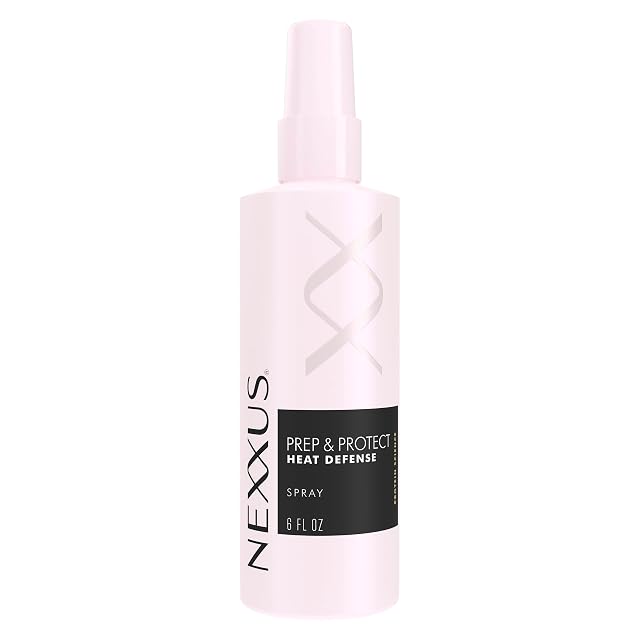
- “450°F HEAT PROTECTION SPRAY: Nexxus heat protectant shields hair from blow dryers and styling irons, creating a flexible shield on each strand to help protect against heat.”
- “POWERED BY STYLEPROTECT TECHNOLOGY: This heat protectant spray locks in moisture and defends against humidity and environmental stressors for smooth, protected-looking styles.”
- “DETANGLES INSTANTLY: This heat protectant spray makes hair easier to manage while delivering a weightless conditioning mist that detangles and softens before styling.”
- “SOFTNESS + NO STICKY BUILDUP: This nourishing heat spray helps add softness, shine, and frizz control… Formulated to help prevent static and leave no sticky buildup or flakes.”
- “COLOR-SAFE FORMULA + CONSUMER-VALIDATED RESULTS: Nexxus heat protectant spray protects vibrancy after styling; 89% agree hair felt moisturized In a salon study with 45 consumers on 11.3.2021”
- From the description: “Nexxus uses protein science not just to repair hair but to restore its ability to perform”
Forty-five people, one date, one question
“89% agree hair felt moisturized In a salon study with 45 consumers on 11.3.2021”
This is the only cited evidence on this shelf.
What is good about it.
It names the sample size, the date, the setting, and — crucially — what was asked: whether hair felt moisturized.
That is a consumer-perception measure, and the page says so by using the word “agree”. Nobody is claiming an instrument measured anything.
Which makes it a modest claim you can evaluate: forty-five people, one question, 89 per cent saying yes.
What it is not.
It is not evidence of heat protection.
“Hair felt moisturized” is a conditioning result, and the bullet attaches it to a sentence about color vibrancy — so the one number on this page does not measure the thing the product is named for.
Nothing on this shelf measures that.
Forty-five is also a small sample, no control group is mentioned, and a salon study is not a blind trial.
So it is the weakest kind of real evidence. And it is real, and it is the only real evidence here.
The contrast is instructive, because the other page that cites figures does the opposite.
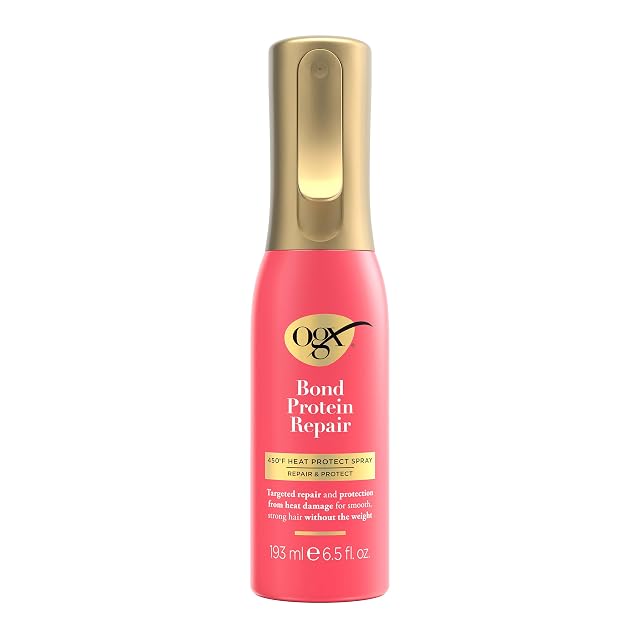
OGX, $10.47 — “makes hair six times stronger and provides 80% less breakage**; saves 5,800 hair strands from breaking each month***”
Three figures, three different footnote markers, and the text of none appears anywhere on that page. No test method, no comparison, no hair type, no sample size.
And the 5,800 invites a check. A head of hair holds roughly 100,000 strands, and normal shedding is 50 to 100 a day — 1,500 to 3,000 a month. So “5,800 saved from breaking each month” describes breakage at two to four times the rate of all normal shedding combined.
That may be defensible for severely bleached hair under aggressive testing, which is the population that product names. Presented without its footnote it reads as a figure for ordinary hair, and for ordinary hair it describes nothing recognisable.
One large unsourced number, one small sourced one.
The seven other items here cite nothing at all: the Hairitage at $8.94, the L’Oreal at $8.99, the CHI at $13.99, the Moroccanoil at $15.00, the TYMO at $16.99, the Bumble at $17.00 and the Living Proof at $34.00.
“A flexible shield that locks in moisture” is the best description on this shelf
“creating a flexible shield on each strand”, “locks in moisture”
It names the two things a heat protectant actually does, and no other page here names the second.
A film over the cuticle conducts heat more slowly than hair does. That is the shield.
And it slows the escape of water from inside the shaft. That is the locking in of moisture, and it is the part that matters most.
Here is why.
The damage a hot tool does is driven by the water inside the hair.
At iron temperatures that internal water can pass 100 °C (212 °F) and flash to steam within the fiber, and the steam blows microscopic cavities through the cortex on its way out — the pattern known as bubble hair.
A film that moderates how fast water leaves moderates that whole event.
“Flexible” is also doing real work: a brittle film cracks when a strand bends, and a cracked film has gaps in it.
So the wording is better than the shelf average, and the substance behind it is still not disclosed.
STYLEPROTECT is a registered name. It is not a molecule. And “protein science” is a discipline rather than an ingredient.
What the mechanism almost certainly involves is a film-forming agent, and in most commercial heat protectants that means silicones.
Not one of the nine pages on this shelf names a silicone, or any other film-former.
Nine products sold on a protective film, and none says what the film is made of.
What the others name instead.
Proteins — rice protein on the Hairitage at $8.94, “smart binding hair proteins” on the OGX at $10.47, hydrolyzed keratin on the TYMO at $16.99, a “Honey Protective Complex” on the Bumble at $17.00
Oils — argan on the Hairitage, argan and panthenol on the Moroccanoil at $15.00, argan on the TYMO
Nothing — this, the L’Oreal at $8.99, the CHI at $13.99, the Living Proof at $34.00
And oil is the wrong mechanism for a thermal barrier: it conducts heat rather than insulating, and it has a smoke point, so at 230 °C (446 °F) an oil on a plate is being cooked.
A protein patches the cuticle, which helps a film hold. Neither is insulation, and only this page describes what insulation would be.
Color-safe, which is where the claim belongs
“COLOR-SAFE FORMULA… protects vibrancy after styling”
Heat is what lifts color.
Dye sits in the cortex, the cuticle holds it there, and a hot iron opens the cuticle and drives water out through it — taking dye molecules with it.
Which makes heat styling the single biggest cause of fade after washing — so a protectant used immediately before an iron is exactly where a color claim belongs.
Two pages on this shelf make one: this, and the Bumble and bumble at $17.00 (“Color Safe”).
Seven do not.
Including the OGX at $10.47, whose own second bullet names bleach as the damage it repairs — which makes its silence on color the oddest gap on this shelf.
Static, which nothing else here mentions
“Formulated to help prevent static and leave no sticky buildup or flakes”
No other page on this shelf mentions static.
Why it belongs on a pre-iron product.
Static is dry hair carrying charge, and heat styling is what dries it.
It is also the specific complaint of fine hair in winter, and the reason a style that looked finished at the mirror does not look finished at the door.
A conditioning film reduces it by holding water in — the same mechanism as everything else this page claims, so it is a coherent addition rather than a bolted-on benefit.
The “no flakes” half of the same bullet is worth separating from “no sticky buildup”, because they are different failures.
Sticky is too much product. Flaking is a film that dried brittle and broke — which is the failure “flexible shield” in bullet one is claiming to avoid, so the two bullets are consistent with each other.
And the residue promise is the one every page on this shelf makes.
CHI, $13.99 — “non-greasy spray instantly absorbs without buildup”
Hairitage, $8.94 — “won’t weigh down your hair or leave any sticky residue”
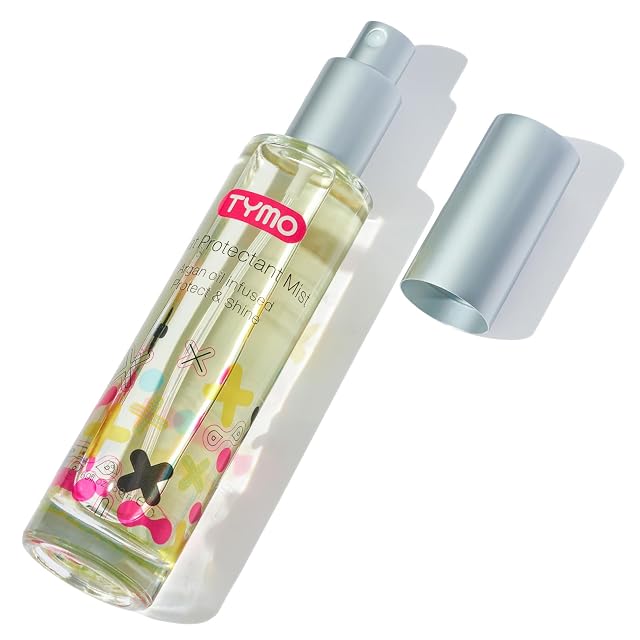
TYMO, $16.99 — “Different from other greasy and crunchy hair oil”
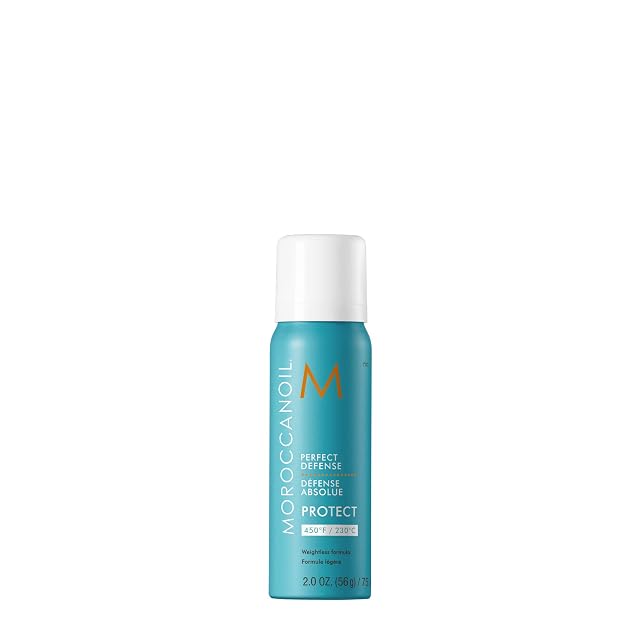
Moroccanoil, $15.00 — “Weightless formula”
OGX, $10.47 — “weightless”, “without weighing down hair”
Nine of nine. When every product in a category promises the same thing, the promise is describing the category’s failure.
And the cause is usually too much product applied too close rather than the formula — which only one page addresses, the OGX at $10.47, with its “6-8 inches away from hair”.
Detangling, which is preventing a different kind of damage
“DETANGLES INSTANTLY… delivering a weightless conditioning mist that detangles and softens before styling”
The quiet practical claim on this page, and it is about mechanical damage rather than heat.
A pre-styling mist goes on the whole length before you comb out a section and clamp it. And the combing is where breakage happens — not the heat.
A product that reduces drag during sectioning prevents a real kind of damage that has nothing to do with temperature.
This is the only page to say so.
It also implies the product can be used on damp hair, since detangling is a damp-hair job — and the page never says whether to apply it damp or dry.
Which is the one instruction that matters most, and the shelf divides on it.
OGX, $10.47 — the only complete routine here, and it is right: “6-8 inches away… on damp hair from mid-length to ends (avoiding roots) before blow-drying; then apply on dry hair before curling or straightening”
Bumble and bumble, $17.00 — the simple version, correctly: “protects dried hair”
Moroccanoil, $15.00 — “damp or dry”, plus a dry-spray option for second-day touch-ups
Hairitage, $8.94 — backwards: “wet or dry hair before blow drying or using any hot styling tools”
this, and four others — nothing
The two-stage split is the right idea: a dryer is how the water gets out, and an iron closing on hair that still holds water is where the steam damage happens.
What is not published
No ingredient, as above — STYLEPROTECT is a name and “protein science” is a discipline.
No application instruction, as above, on a page that implies damp use through its detangling claim.
No volume. One page on this shelf publishes one: the OGX at $10.47, “6.5 fl oz”, about $1.61 per fluid ounce. The Bumble at $17.00 declares itself a “Mini Travel Size”. Everything else, including this, is a price with no quantity — so $13.99 cannot be compared with $8.94 or $34.00 in any meaningful way. On a spray, price per ounce is the whole of the value question, and this page shares its exact price with the CHI at $13.99, which also publishes no volume.
No degree of protection. Nothing on this shelf publishes how much cooler the hair runs, what proportion of damage is prevented at a stated temperature, how long the film lasts, or how many passes of an iron it survives. At least eight of the eleven items here publish the same ceiling — 450 °F — which is the maximum setting of nearly every consumer flat iron rather than a measured protection limit. So the one number eight brands share is a statement about the tool rather than the product, and the ninth, the Living Proof at $34.00, publishes no temperature at all.
No hold statement. One page settles it, twice: the Moroccanoil at $15.00 — “Weightless, no-hold spray”, “contains no hold, blending seamlessly into any existing styling regimen”. The Living Proof at $34.00 claims the opposite with “Enduring Style: Maintains style for extended periods.” It is a genuine fork: a protectant with any hold is also a styling product and interferes with what you apply after it, while a no-hold one disappears under your routine.
No UV filters. One item on this shelf claims them, and it is the only additional protective claim anywhere here: the Bumble and bumble at $17.00 — “Added UV Filters help protect hair against the drying effects of the sun.” On a page that already claims to defend against “humidity and environmental stressors”, sunlight is the stressor left out.
No free-from list. Three pages publish one: the L’Oreal Paris at $8.99 (“sulfate free, paraben free, dye free”), the CHI at $13.99 (“cruelty-free, paraben-free, & sulfate-free”) and the OGX at $10.47 (“without dyes or parabens”).
No scent description, where two pages describe theirs at length and in strikingly similar words: the TYMO at $16.99 (“spicy amber and musk with sweet florals”) and the Moroccanoil at $15.00 (“spicy amber aromas and sweet floral notes”).
No country of manufacture.
Availability
Read on the day this page was built: $14 at the American Amazon shop.
Read from Keepa on the day this page was last revised; stock and price both move without notice.
Prices quoted in this text were read on 2026-10-05. The live price is at the top of the page.