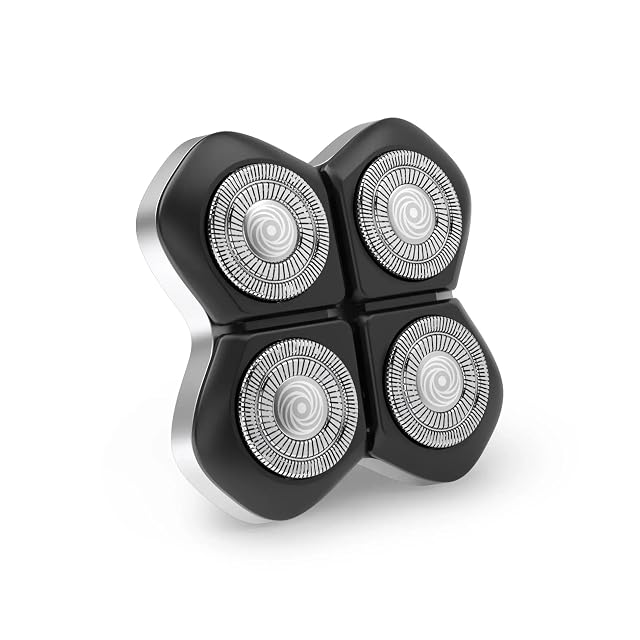
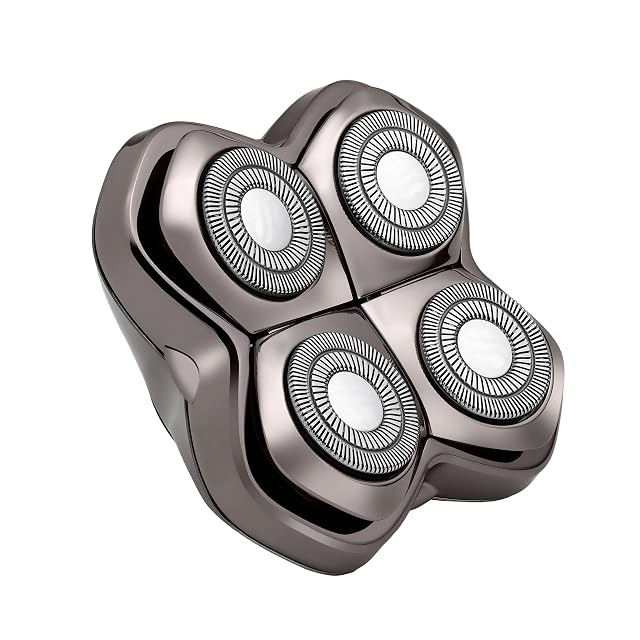
What the maker puts in writing
- “Precision Blades for Shaving: Our replacement blades are designed for the free bird PRO shaver for bald head, ensuring a close, smooth shave. Compatible with the free bird shaver, these blades make part of the flex series shaving kit for men.”
- “Optimal Freebird PRO Performance: The freebird flex series PRO head shaver replacement blades enhance the efficiency of your freebird shaver.”
- “Easy Replacement and Maintenance: Keep your free bird shaver in top condition with our free bird replacement blades. These flexseries electric head hair shaver blades are easy to install and maintain.”
- “Designed for Flexibility: Our freebird head shaver replacement blades are crafted for the freebird flex series PRO, offering adaptability and comfort.”
- “Easy Replacement and Maintenance:” — the same text as bullet three, with one addition: “Replace the ScalpSafe rotary blade every 4 weeks, to maintain buttery smooth blade performance keeping them sharp and rust-free.”
Every four weeks, which is the only interval on this shelf
“Replace the ScalpSafe rotary blade every 4 weeks, to maintain buttery smooth blade performance keeping them sharp and rust-free.”
At $29.95 a set, a four-week cycle is thirteen sets a year: roughly $390.
That is our arithmetic rather than a published figure, and it is the figure a buyer needs before adopting the schedule — because the running cost then exceeds the price of most shavers several times over.
What the interval is for, and the page gives two reasons that are both real.
Sharpness. A rotary cutter is a thin circular edge sweeping under a slotted cap, and what dulls it is the number of passes rather than the hair itself. A blunt rotary does not stop cutting; it starts pulling, because the hair is pushed before it is parted — and pulling on a scalp is the complaint that ends the use of these tools.
Rust. This is the one the page is right to name on a part rinsed under a tap after every shave. A shaver edge is a few microns of apex, and corrosion there blunts it long before the body of the blade shows anything — so a head can look perfect and cut badly.
Which makes four weeks defensible as a performance recommendation rather than a durability one.
It is the interval for “buttery smooth”, not the interval before failure.
The page does not draw that distinction, and it is the distinction that decides whether $390 a year is sensible.
What the rest of the shelf publishes: nothing.
Skull Shaver, $24.97 — no interval, and the best reason for having one: “the replacement head keeps hair clippings out of the transmission”. A worn head lets debris into the drive mechanism, and at that point the failure is the shaver rather than the part.
MANSCAPED, $24.99 — no interval; a blade “designed to withstand dirt, oil, and buildup”, for an unstated period
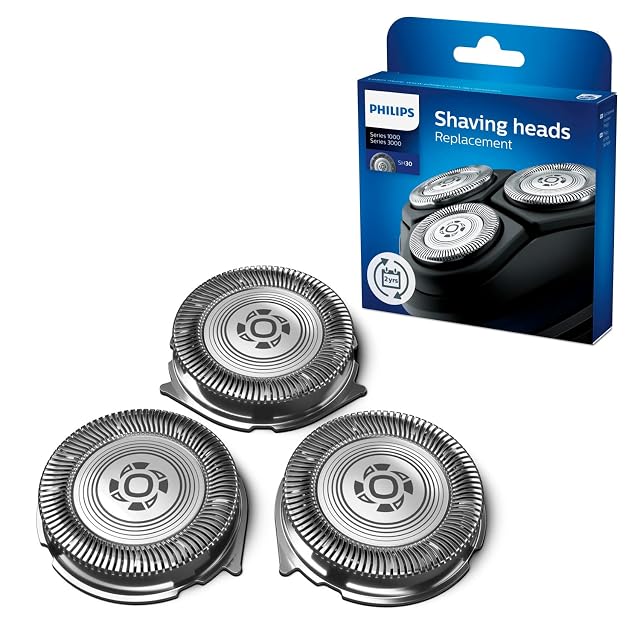
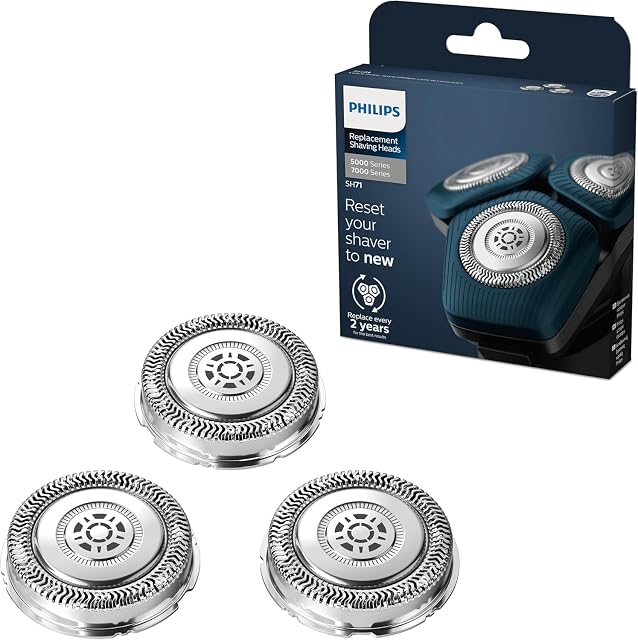
Norelco, $33.33 — no interval, and no product description at all: four bullets of model numbers
So one page gives the figure, one gives the reason, and two give neither. The complete argument exists only across pages.
The honest reading: this is the only page here that treats the product as a consumable with a schedule, which is what it is.
The same bullet, printed twice
Bullets three and five share their first two sentences word for word.
And bullet five is the one with the addition — the four-week instruction, which is the most useful sentence on the page.
So the listing is effectively four bullets, and its single best fact is appended to a repeat.
Which is worth recording because of what the other four contain.
Read together, they say one thing four times: these blades fit the Freebird FlexSeries PRO.
Bullet one — “designed for the free bird PRO shaver for bald head… Compatible with the free bird shaver, these blades make part of the flex series shaving kit”
Bullet two — “The freebird flex series PRO head shaver replacement blades enhance the efficiency of your freebird shaver… these head shaver replacement heads ensure a seamless shaving experience”
Bullet three — “Keep your free bird shaver in top condition with our free bird replacement blades. These flexseries electric head hair shaver blades…”
Bullet four — “Our freebird head shaver replacement blades are crafted for the freebird flex series PRO… These men’s electric shaver replacement heads fit seamlessly with the free bird shaver PRO”
The brand name appears in every bullet, several times, spelled three different ways: “freebird”, “free bird”, and “flexseries” against “flex series”.
That is search-term repetition rather than description, and the cost is specific.
There is no material, no piece count, no fitting procedure and no dimension anywhere on the page.
What a buyer can establish from it: that these fit a FlexSeries PRO, and that they should be changed every four weeks.
Two facts — one of them the most valuable on this shelf.
For contrast, the page here that uses its space differently is the MANSCAPED at $24.99, which spends one of five bullets on a step-by-step fitting procedure and another on what the part arrives coated in.
And the opposite extreme is the Norelco at $33.33, whose four bullets are nothing but about forty model numbers across four brands, with no product description at all.
Three ways of filling the same space, and only one of the three tells you how to use the thing.
A rotary blade, which is the right mechanism for a scalp
the “ScalpSafe rotary blade”, for “a clean bald head”, designed for “flexibility” and “adaptability and comfort”
Why rotary rather than foil — the division that runs through this shelf.
Rotary — this, and the Skull Shaver Carver PRO 4 at $24.97 (for a Pitbull, Palm or Butterfly Kiss)
Foil — the MANSCAPED at $24.99 (a “SkinSafe foil blade”, for “groin hair in a single stroke”) and the Norelco at $33.33 (a Bodygroom and Satinelle part)
A foil is a thin perforated sheet over an oscillating cutter: hair enters the perforations and is sheared underneath, and the sheet holds your skin off the blade.
It cuts closer than anything else — the only thing between the edge and your skin is a few hundredths of a millimeter of steel — and it cannot follow a compound curve, because it is flat and rigid, so it bridges across a dome rather than conforming to it.
A rotary is circular cutters under slotted caps, and the modules float: they sit on springs or pivots at independent heights, so the set follows the two-way curve of a skull.
It gives up a little closeness in exchange for contact.
So the mechanism follows the body part. Every head shaver is rotary and no scalp shaver is a foil — and “closer shave” claims cannot be compared across the two.
Which is what “designed for flexibility” and “adaptability” in bullets two and four are gesturing at without saying: the flex is the mechanism.
What the page does not publish about it is anything measurable.
No number of cutting modules.
No mention of springs or pivots — where the Skull Shaver at $24.97 publishes the feature outright: “the spring-loaded blades also minimize skin irritation.”
That is the thing which stops you pressing a spinning blade into your scalp, and it matters because pressing harder on a rotary does not cut closer: it pushes skin up into the slots, which is what produces raw patches.
No material — where the Skull Shaver names “Japanese stainless steel” and the MANSCAPED names “stainless steel”, neither with a grade.
And “ScalpSafe” is a trade name with no definition anywhere on the page.
Which is where one comparison on this shelf is unflattering.
The MANSCAPED page at $24.99 uses the parallel name “SkinSafe” and attaches a published disclaimer to it: “*SkinSafe technology does not guarantee cut protection” — the same note that brand carries on its nose trimmer on GroomVerdict’s nose-ear-trimmers shelf, where it is the only safety disclaimer on a shelf of nine.
A safety-sounding trademark with a limit printed next to it is more useful than one without.
What a new blade arrives coated in, and this page does not say
A new cutting part arrives coated in something, always.
Ground steel rusts in a warehouse, in a container and on a shelf, so it leaves the factory under a film — and the question a buyer cannot answer from most packets is whether that film is a lubricant to keep or a preservative to wash off.
They look and feel identical, and the consequences are opposite. A lubricant washed off leaves a dry assembly that wears faster. A preservative left on is sticky: it holds clippings against the blade and drags.
One page on this shelf answers it.
MANSCAPED, $24.99 — “Each foil comes pre-lubricated to run smoothly, reducing wear and tear while helping you hit max RPMs.”
And this site holds the other half of the distinction on two further shelves.
On GroomVerdict’s blade-care shelf, the Oster Blade Wash at $15.88 is the only product of its family to make the point, and it makes it twice: “removing factory-applied preservatives”, and “Removes factory applied preservatives from new blades.”
And on the cutting-scissors shelf, the Equinox shears at $8.90 give the instruction for the opposite case: they arrive “coated with lubricating oil”, so “wash them with gentle soap and lukewarm water, then dry with a soft cloth.”
Which matters on this page specifically, because of its own four-week schedule.
A buyer following that instruction opens a packet thirteen times a year — and is told nothing about what to do with what is on the blade when they do.
The page’s own stated reason for the interval is keeping the blades “sharp and rust-free”, which makes the question of the protective film part of the same subject, and it is not addressed.
What is not published
No material. The Skull Shaver at $24.97 names “Japanese stainless steel” and the MANSCAPED at $24.99 names “stainless steel” with a purpose attached. This page and the Norelco at $33.33 name nothing. Which matters on a page whose own interval is justified by rust: corrosion resistance is a property of the alloy, and no grade or hardness appears anywhere on this shelf. A shaver blade’s two failure modes — going blunt and corroding — trade against each other, because the chromium that resists rust is added at the expense of hardness.
No piece count. A rotary set is several cutting modules plus a cap, and whether this pack is one module or the whole assembly changes the value entirely. No page on this shelf publishes a count — the nearest is the Skull Shaver’s model name, “Carver PRO 4”, which implies four.
No fitting instruction. “Easy to install and maintain” is asserted twice, in the duplicated bullets, and never explained. The MANSCAPED at $24.99 publishes a full procedure: “push the bottom of the blade head with your thumb in the direction of the arrow to snap it out. Then, insert the lug of the new blade head into the slot in the top of the trimmer. Then, press it back until it snaps in place.” Which matters more here than anywhere else on this shelf, because a four-week interval means doing it thirteen times a year.
No model numbers. One family — “the freebird flex series PRO” — where the Norelco at $33.33 lists about forty named models across four brands, including two Remington models, a competitor, and the Skull Shaver at $24.97 covers three whole product families with “all” in front of them. A family name answers “will this fit mine” probabilistically; a model list answers it definitively.
No cleaning or care instruction beyond the interval, on a part whose stated enemy is rust.
No warranty. No item on this shelf publishes one, which is unsurprising on a consumable. Across GroomVerdict, published terms are the exception: five years on one nose trimmer, two years on another and on one air styler, a lifetime guarantee on one comb, 365 days on one brush, 30 days on one clipper blade and one guide comb, and a “90-DAYS Unconditional Return + 12-Month Quality Promise” on the CIICII scissors kit at $19.98.
No country of manufacture, which no item on this shelf publishes. The only one anywhere on this site is on the nose-ear-trimmers shelf: the ROYAL manual trimmer at $15.99, “Manufactured in South Korea by an established company with 60 years of metal product manufacturing experience.”
Availability
Read on the day this page was built: $30 at the American Amazon shop.
Read from Keepa on the day this page was last revised; stock and price both move without notice.
Prices quoted in this text were read on 2026-10-05. The live price is at the top of the page.