Skip to content

The best hair straightener

Three published figures separate straighteners: plate length, coating and temperature range. This site reports temperatures and does not advise on them — but a range that cannot be adjusted at all is a decision the manufacturer has made for you.

The adjustable entry model

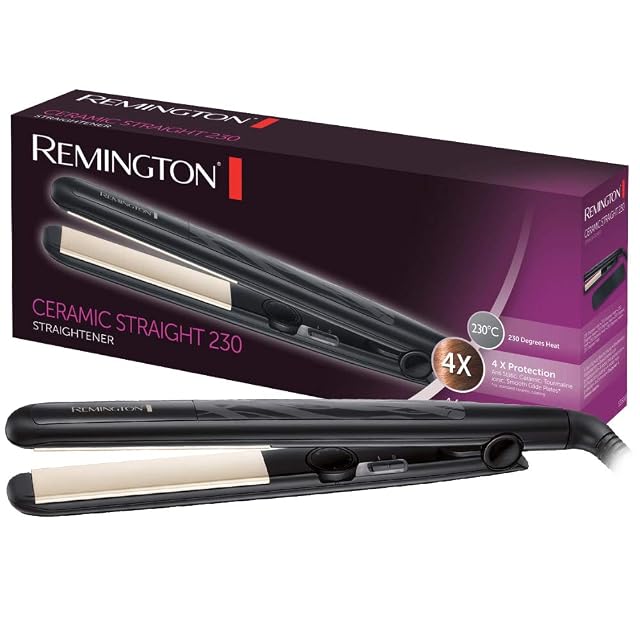
The Remington S3500 publishes four figures: 110 mm (4.33 in) long floating plates, ten temperature settings from 150 to 230 °C (302 to 446 °F), a fifteen-second heat-up and an automatic shut-off after sixty minutes. Ten steps is a real range. Its twin with a display, the Remington S8540, is set against it in their comparison.

The widest range, and a mat in the box

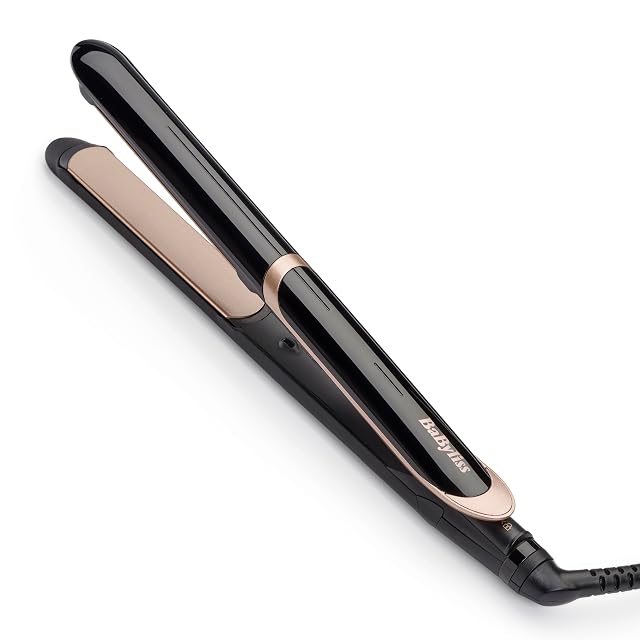
The BaByliss ST393E runs from 140 to 235 °C (284 to 455 °F) — lower at the bottom and higher at the top than anything else here — on titanium-ceramic plates, in thirty seconds, with a five-year warranty and a heat protection mat included. The mat is the accessory that decides whether a hot tool can be put down. Plate width is not published.

The one that publishes nothing

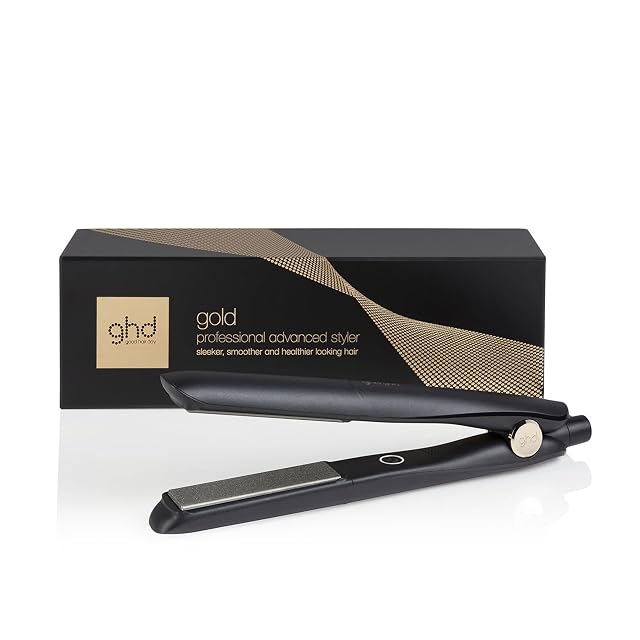
The ghd gold is the one in this group whose listing publishes nothing: no temperature, no plate width, no heat-up time. Our page says “not published” rather than borrowing figures from another model. If those numbers matter to your decision, get them from ghd before ordering.

What we would not do

We would not buy a heated tool with a single fixed temperature. It is the manufacturer deciding for every head of hair at once, with no way to correct it. What the temperature dial means explains how to read a range, and the ghd Bodyguard states protection up to 230 °C (446 °F). All the straighteners are in the straighteners category.

Which clipper suits your cut?

You straighten occasionally
A basic model with a fixed sensible temperature is enough, and lower heat is kinder.
You straighten often
Plate quality and temperature stability matter, because repeated passes are what damage hair.
Your hair is fine or lightened
Adjustable temperature is essential, and the lower end of the range is where you should be.
You want curls as well
Look at rounded plate edges: a straightener with sharp edges cannot form a curl cleanly.

Picking by the cut you want

Straightening

The obvious use. Even heat across the plate and a single confident pass matter more than the maximum temperature.

Curling and waving

Possible with rounded plates and practice. A straightener with square edges leaves a crease instead of a curve.

Smoothing roots and fringe

Narrow plates reach closer to the scalp, which is why plate width is a real choice rather than a detail.

Travel

Dual voltage and a heat-resistant pouch. Both are practical points that are easily overlooked before a trip.

The details that decide the result

Adjustable temperature
The most important feature for hair health. Fine, lightened or damaged hair needs the lower part of the range, and a fixed-temperature tool removes the choice.
Temperature stability
A plate that drops in temperature during a pass makes you go over the same section twice, which is what actually causes damage.
Plate width
Wide plates cover long hair quickly; narrow plates reach the roots and short layers. The choice follows your hair, not the price.
Plate edges
Rounded edges allow curling and prevent a crease at the start of a pass. Square edges are fine for straight styling only.
Floating plates
Plates that move slightly keep even contact across a section. Without that, pressure varies along the pass and so does the result.

Which figure for which hair

Your hairWhat to look forWhat to avoid
Fine or lightenedA low temperature settingA fixed high temperature
ThickStable heat and wide platesRepeated passes
ShortNarrow platesWide plates near the scalp
Curling tooRounded edgesSquare-edged plates

The mistakes we see

Using the highest temperature by default
Higher heat does not mean straighter; it means more stress. The lowest temperature that works in one pass is the right one.
Passing over the same section repeatedly
Damage comes from repeated exposure more than from a single pass. If one pass is not enough, the section is too thick or the plate is too cool.
Straightening damp hair
Unless the tool is explicitly designed for it, moisture in the hair turns to steam against the plate. That is not a styling technique.
Wrapping the cable around the hot body
It damages the cable where it enters the handle, which is where these tools usually fail.

By who is being groomed

The occasional user
A simple model with a sensible temperature and a heat-resistant pouch. Enough.
The daily user
Stable temperature, floating plates, and a setting low enough for your hair. Consistency protects hair better than any coating claim.
The one who also curls
Rounded edges and narrower plates, plus the acceptance that curling with a straightener takes practice.

Blades, oiling and working life

Straightener plates collect product residue, and that residue bakes on and drags on the next pass. Cleaning the plates cold is the whole maintenance, and it does more for the result than any upgrade.

  • Wipe the plates when completely cold, with a damp cloth and nothing abrasive.
  • Never use a scouring pad: a scratched plate catches hair permanently.
  • Store in a heat-resistant pouch, and only once fully cool.
  • Do not wrap the cable around the body; coil it loosely instead.

Safety

Plates hot enough to burn, used close to the scalp and often near a basin.

  • Set it down on a heat-resistant surface, never on a towel or a bed.
  • Do not use near a filled bath or basin.
  • Let it cool completely before storing; a hot tool in a bag is a fire risk.
  • Stop using it if the cable is damaged where it meets the handle.

What we picked, and why

  1. Remington S3500

    110 mm (4.33 in) plates · 10 settings, 150–230 °C (302 to 446 °F) · 15 s heat-up · auto shut-off

    Floating plates 110 mm (4.33 in) long, with a ceramic-tourmaline coating, ten temperature settings between 150 and 230 °C (446 °F), fifteen seconds to heat, and an automatic shut-off after sixty minutes.

    Best for: Short to mid-length hair, and a first straightener where the temperature must still be adjustable.
    7.4/10

  2. BaByliss ST393E

    6 settings, 140–235 °C (284 to 455 °F) · 30 s heat-up · titanium-ceramic · heat mat

    Six temperature settings from 140 to 235 °C (284 to 455 °F) on titanium-ceramic plates, thirty seconds to heat, an anti-frizz ionic function, a heat protection mat in the box and a stated five-year warranty.

    Best for: Fine or colored hair, where a setting below 150 °C (302 °F) is the one you want to have available.

    7.8/10

  3. ghd gold

    Manufacturer specifications not published on the listing

    The best-known straightener in this group, and the one whose Amazon listing publishes nothing. ghd gives three bullet points — quality, durability, flexible styling — and no temperature, no plate width, no heat-up time.

    Best for: Someone who already knows this range and is buying it again.

    8.0/10

What people ask about this

What plate width should I choose?

Narrow plates reach a fringe and work close to the root; wide plates cross long hair in fewer passes. None of the straighteners here publishes it; the 110 mm (4.33 in) on the Remingtons is the plate length.

Which setting should I use?

Not a question this site answers. The manufacturers publish ranges — 150–230 °C (302 to 446 °F) on the Remington, 140–235 °C (284 to 455 °F) on the BaByliss — and the manual that came with the tool carries the guidance.

What temperature should I use?

The lowest that straightens in one pass for your hair. Fine or lightened hair needs the low end of the range, and repeated passes do more damage than a single hotter one.

Can I straighten damp hair?

Only with tools explicitly designed for it. On a standard straightener, moisture turns to steam against the plate and that is not good for hair.

Ceramic, tourmaline or titanium?

The material affects how heat is delivered and how the plate glides, but even heat and stable temperature matter more than the name of the coating.

Why does my straightener pull?

Usually product residue baked onto the plates, or a scratch. Cleaning the plates cold solves the first; the second is permanent.

Can I curl with a straightener?

Yes, if the plate edges are rounded. Square edges leave a crease where the pass begins, and no technique removes that.

Do I need heat protection on my hair?

A heat protectant is the usual recommendation before any hot styling, alongside using the lowest effective temperature. It does not make high heat harmless.

Each clipper, and the cut it handles

Remington S3500

Good on: Short to mid-length hair, and a first straightener where the temperature must still be adjustable.

Strongest suit: Adjustable temperature across ten steps, one more than the S8540 above it publishes

Weakest suit: Remington publishes the plate length (110 mm, 4.33 in), not the width that decides the number of passes

Read the full review →

BaByliss ST393E

Good on: Fine or colored hair, where a setting below 150 °C (302 °F) is the one you want to have available.

Strongest suit: The widest published temperature range here, starting at 140 °C (284 °F) — lower than the Remingtons reach

Weakest suit: Six settings across a 95-degree range is a coarser step than the Remingtons' nine and ten

Read the full review →

ghd gold

Good on: Someone who already knows this range and is buying it again.

Strongest suit: The same brand's heat-protection spray, the ghd bodyguard, does publish its protection: up to 230 °C (446 °F)

Weakest suit: The manufacturer publishes no specification at all on this listing: no temperature, no plate width, no heat-up time

Read the full review →

What more money gets you here

What you will need as well

Blades, combs and oil from the same aisle, at the price we recorded. Check they fit the clipper you pick before ordering: it depends on the blade mount and the part number, which the listing states.

  • ghd bodyguard heat protect spray · Heat protection — Stated protection to 230 °C (446 °F) · damp or dry hair · non-sticky
  • Bumble and bumble. Heat Shield · Heat protection — Thermal mist · protection to 450 °F · Honey Protective Complex · travel size · $17
  • Sosoon Boar Bristle Beard Brush · Combs & brushes — Beard brush and comb · boar bristle · natural wood body · for beard and mustache · $9
  • Hercules Sägemann 7643M · Combs & brushes — 8.5 inch · wavy teeth · handle · centimeter scale on the back · $30
  • ProCase PC-08364250 · Cases & storage — Hard EVA · movable dividers · mesh pockets · carabiner and hand strap · $18
  • ProCase PC-08364382 · Cases & storage — 20 × 12.5 × 5.5 cm (7.9 × 4.9 × 2.2 in) · hard EVA · mesh pocket · fits QP2824/31 and nine others

In one sentence

Pairings worth reading here

Comparisons already published between two clippers from this guide or this aisle.

How this page is made

The clippers and shavers here come from the catalog of this site. Specifications are the published ones, from the maker and from the Amazon page; prices are the Keepa figure for the date below, and both change. Ranking rests on declared specifications, on stated strengths against stated limits, and on price. Nothing here has been used on hair by us, and the page does not suggest otherwise.

Last checked on

Prices quoted in these summaries are dated readings. The live price is shown next to each product.

The tool we use ourselves

Chosen your tool? Now buy it at the right price.

Air stylers and cordless clippers swing widely across the year, and the biggest "discounts" often land at prices the same model sold for six weeks earlier. UniverTrack tracks the real price history across retailers, spots fake reductions, and alerts you when it is genuinely the moment to buy.

Real price historyBuy-now alertsAI buying assistant
Try free for 14 days →
No commitment · Cancel in one click · 5 languages