Skip to content

The best hair clipper for cutting at home

Every clipper here cuts. What separates them is the step between lengths — the specification that decides whether you can blend — and whether the box contains the cape and the brush that decide where the hair ends up.

What decides a home haircut

Not the motor. Two clippers with identical motors are different machines if one steps three millimeters at a time and the other half a millimeter, because the step is what lets you blend one length into the next.

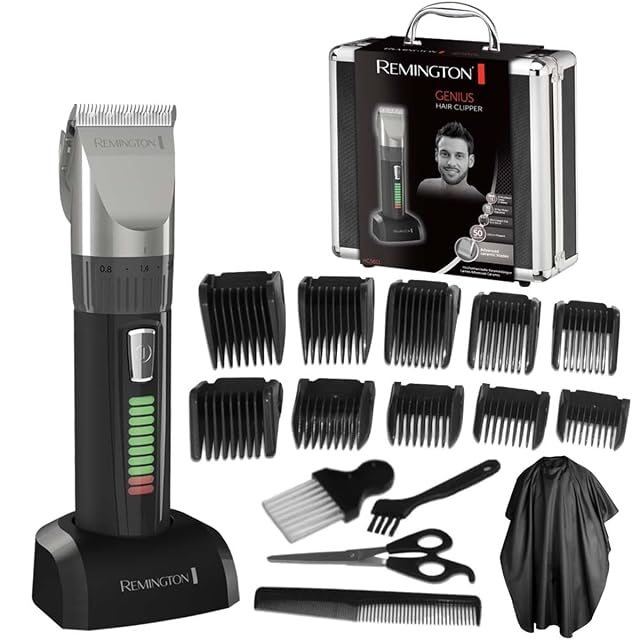
The Remington HC5811 is first for a first haircut: ten guards from 3 to 40 mm (1.57 in), a 0.8–2 mm (0.03 to 0.08 in) lever on the head for the neckline, and — the part that matters more than any specification — an aluminum case containing scissors, a comb, a neck brush and a cutting cape. That is the difference between a haircut and an afternoon of cleaning.

When the wheel is worth more than the combs

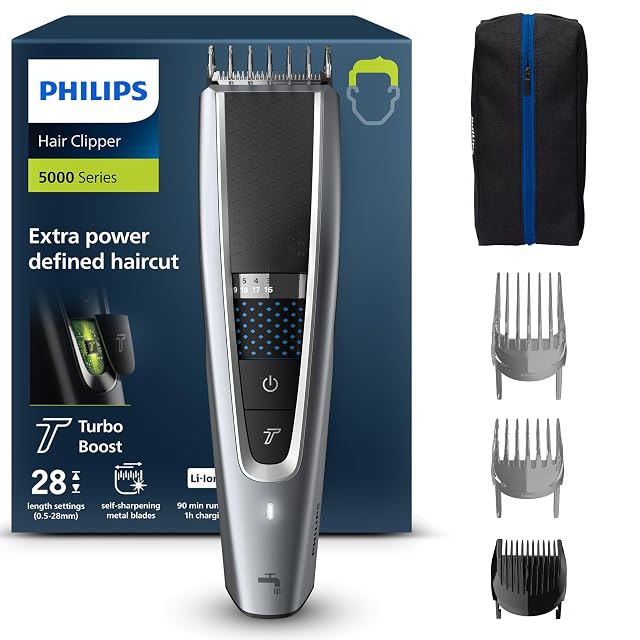
The Philips HC5630 is second, and first if you already own a cape. Its zoom wheel sets 28 lengths from 0.5 to 28 mm (0.02 to 1.10 in) without changing anything on the head, so you move from one length to the next without stopping. Philips also states the whole clipper is washable.

When to pay more

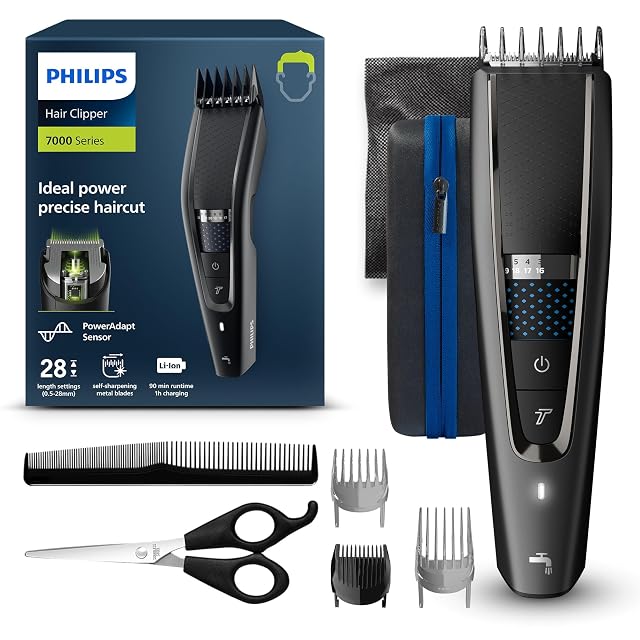
The Philips HC7650 has the same wheel and adds a two-sided DualCut blade and the Trim-n-Flow comb, which clears cut hair rather than packing it against the blade. Both address one failure: a clipper that stalls or leaves an uneven line in thick hair. On fine hair they change nothing, and the HC5630 is the better buy.

What we would not do

We would not buy a clipper on its motor figure without reading the guard list. It is the one specification that decides the result.

Which clipper suits your cut?

You want a single uniform length
Almost any clipper with a decent guard set does it, and the skill needed is small.
You want to fade or blend
You need close-cutting blades and guards in small increments, because a jump between lengths is what makes a fade visible.
You are cutting your own hair
Look at balance and how the clipper sits in the hand when you cannot see what you are doing.
You cut thick or coarse hair
Motor behavior under load matters more than the number of guards in the box.

Picking by the cut you want

The regular maintenance cut

The commonest use: one length, every few weeks, over the whole head. It is what these tools are built for.

Fading and blending

Demands guards in small steps and a blade that can be adjusted. Without both, the transitions show.

Cutting children's hair

Noise and vibration matter as much as the cut, because a loud clipper ends the session before it starts.

Neckline and edging

A separate, narrower trimmer usually does this better than the clipper that did the bulk.

The details that decide the result

The guard steps, not the guard count
A set that jumps in large increments cannot blend. What matters is whether the lengths follow each other closely, especially at the short end.
Blade adjustment
A lever that varies the cutting length between guards is what makes blending possible. Without it, you have fixed steps and visible lines.
Motor behavior under load
A clipper that slows or snags in thick hair pulls rather than cuts. This is felt immediately and no specification predicts it.
Corded, cordless or both
Cordless is easier to handle around your own head; corded never stops mid-cut. Models that run while charging remove the choice.
How the blade comes apart
Hair packs behind the blade. A clipper whose blade lifts off for cleaning stays sharp-feeling far longer than one that only gets brushed.

Which figure for which hair

What you wantWhat it needsWhat it will not do
One even lengthA basic clipper and guardsBlend between lengths
A fadeSmall guard steps, adjustable bladeHappen without practice
Cutting your own hairBalance and a mirror setupShow you the back
Thick hairA motor that holds speedCut a wet head well

The mistakes we see

Cutting wet hair with a clipper
Clippers are designed for dry hair; wet hair clumps, drags in the blade and cuts shorter than expected once it dries.
Going against the grain first
The first pass sets the length. Working against the growth direction removes more than intended, and there is no putting it back.
Never oiling the blade
A dry blade heats, pulls and dulls. Oiling takes seconds and is the single most effective maintenance on this tool.
Starting with the shortest guard
You can always take more off. Starting long and working down is the only correction available.

By who is being groomed

The simple home cut
One length all over, a decent guard set, and a mirror. Modest tool, entirely sufficient.
The one who wants a fade
Small guard steps and an adjustable blade, plus the acceptance that the first few attempts will not be right.
The family cutter
Quiet, cordless, easy to clean. Practicality beats specification when children are involved.

Blades, oiling and working life

A clipper is kept alive by oil and by removing the hair that packs behind the blade. Both take seconds, and neglecting either turns a clipper that cuts into one that pulls, which is usually blamed on the blade being blunt.

  • Brush hair out from behind the blade after every cut.
  • Apply a drop of clipper oil along the blade regularly, following the instructions.
  • Do not rinse a blade that is not stated as washable, and dry it fully if it is.
  • Replace the blade set when it starts pulling despite cleaning and oiling.

Safety

The risks are minor but real: nicks, heat, and electricity near water.

  • Check the blade for chips before use: a damaged tooth catches skin.
  • Stop if the blade becomes hot to the touch and let it cool.
  • Do not use a corded clipper near a filled basin or in the shower unless it is rated for it.
  • Keep the blade away from moles and skin tags; work around them rather than over them.

What we picked, and why

  1. Remington HC5811

    Ceramic blades · 10 guards, 3–40 mm (0.12 to 1.57 in) · 50 min · case, cape, scissors

    The clipper with the longest accessory list of this group: ten guards covering 3 to 40 mm (0.12 to 1.57 in), an aluminum case, scissors, a comb, a neck brush and a cutting cape, around self-sharpening ceramic blades and a stated 50 minutes of cordless runtime.

    Best for: A first clipper for cutting at home, where the cape and the case matter as much as the motor.
    7.5/10

  2. Philips HC5630/15

    28 lengths, 0.5–28 mm (0.02 to 1.10 in) · zoom wheel · 90 min · fully washable

    A zoom wheel that sets 28 lengths between 0.5 and 28 mm (1.10 in) without changing anything on the head, a comb designed so cut hair does not clog it, and a body Philips describes as completely washable.

    Best for: Home haircuts where the length changes as you go, rather than one length all over.

    7.5/10

  3. Philips HC7650/15

    Trim-n-Flow Pro · DualCut blade · 28 lengths · 90 min

    The Series 7000 adds a two-sided DualCut blade that Philips says cuts twice as fast as a single-sided one, and the Trim-n-Flow comb that clears cut hair as it goes. One hour to charge, 90 minutes of use.

    Best for: Thick or fast-growing hair, where a clipper that stalls mid-pass is the actual complaint.

    7.5/10

    ≈ $90

What people ask about this

What does a home haircut actually need?

A clipper whose lengths step finely enough to blend, and something to catch the clippings. Those two together matter more than motor power, which is why the first pick here is the one with ten guards and a cape rather than the most expensive machine.

Do I need a clipper that goes below 1 mm (0.04 in)?

Only for a very short neckline. Both Philips machines here start at 0.5 mm (0.02 in) on the wheel; the Remington reaches 0.8 mm (0.03 in) with the combs off. All three cover the ordinary range of a home cut.

Can I cut wet hair?

Not with a standard clipper: it is designed for dry hair, and wet hair clumps and cuts shorter than it looks. Some models are stated as usable wet; those are the exception.

How often should I oil the blade?

Follow the maker's instruction, which usually means regularly and after cleaning. A dry blade heats and pulls, and that is mistaken for bluntness.

Why does my clipper pull my hair?

Usually hair packed behind the blade, a dry blade, or a chipped tooth. Cleaning and oiling solve most cases before a new blade is needed.

How do I cut the back of my own head?

With a second mirror and short, overlapping passes. It is the part where a longer guard and patience prevent an irreversible mistake.

Do I need a separate trimmer?

For necklines and edges, a narrower trimmer gives a cleaner result than a full-size clipper. It is not essential, but it is the usual second purchase.

Can the blade be washed?

Only if the model states it. Water on a blade not designed for it causes corrosion, and a corroded blade pulls.

Each clipper, and the cut it handles

Remington HC5811

Good on: A first clipper for cutting at home, where the cape and the case matter as much as the motor.

Strongest suit: Ten guards from 3 to 40 mm (0.12 to 1.57 in) is the widest range in this group, and the separate 0.8–2 mm (0.03 to 0.08 in) setting covers the lengths a guard cannot

Weakest suit: Remington does not publish an IP rating for this model, so nothing here says whether the head can be rinsed

Read the full review →

Philips HC5630/15

Good on: Home haircuts where the length changes as you go, rather than one length all over.

Strongest suit: A zoom wheel changes length without swapping a guard, so you move from one length to the next without stopping

Weakest suit: Only three comb attachments, where the Remington HC5811 ships with ten

Read the full review →

Philips HC7650/15 · $90

Good on: Thick or fast-growing hair, where a clipper that stalls mid-pass is the actual complaint.

Strongest suit: One hour to a full charge against 90 minutes of runtime is the best ratio of the four clippers here

Weakest suit: Philips publishes the DualCut speed claim as a comparison with single-sided blades, without stating the test conditions

Read the full review →

What you will need as well

Blades, combs and oil from the same aisle, at the price we recorded. Check they fit the clipper you pick before ordering: it depends on the blade mount and the part number, which the listing states.

  • Moser Ermila comb set, 6 pieces · Guide combs — Six combs · 3 to 25 mm (0.12 to 0.98 in) · Moser / Wahl Ermila fit
  • Wahl 03170-400 · Guide combs — Eight combs · 3, 6, 10, 13, 16, 19, 22, 25 mm (0.98 in) · snap-on · $45
  • Panasonic Pro X taper blade 2.0 · Clipper blades — X-Taper 2.0 · 45° sharpening · DLC coating · fits 15 Panasonic references · $70
  • Panasonic WER9930Y · Clipper blades — Fading blade · stated for ER-DGP86 only
  • Andis AN1COO0015-D-2 · Blade care — 5-in-1 blade spray · two cans, 15.5 oz / 458 ml each · coolant, disinfectant, lubricant, cleaner, rust preventative · $22
  • Andis 12241 · Blade care — Clipper oil · three 4 oz resealable bottles · colorless and odorless · for clippers, blades and shears · $14

Pairings worth reading here

Comparisons already published between two clippers from this guide or this aisle.

How this page is made

The clippers and shavers here come from the catalog of this site. Specifications are the published ones, from the maker and from the Amazon page; prices are the Keepa figure for the date below, and both change. Ranking rests on declared specifications, on stated strengths against stated limits, and on price. Nothing here has been used on hair by us, and the page does not suggest otherwise.

Last checked on

Prices quoted in these summaries are dated readings. The live price is shown next to each product.

The tool we use ourselves

Chosen your tool? Now buy it at the right price.

Air stylers and cordless clippers swing widely across the year, and the biggest "discounts" often land at prices the same model sold for six weeks earlier. UniverTrack tracks the real price history across retailers, spots fake reductions, and alerts you when it is genuinely the moment to buy.

Real price historyBuy-now alertsAI buying assistant
Try free for 14 days →
No commitment · Cancel in one click · 5 languages